Note: the actions, contraindications and usage sections are currently published in Arabic (primary market content); translations are in progress. Herb name, nature, taste and meridians are shown as is.
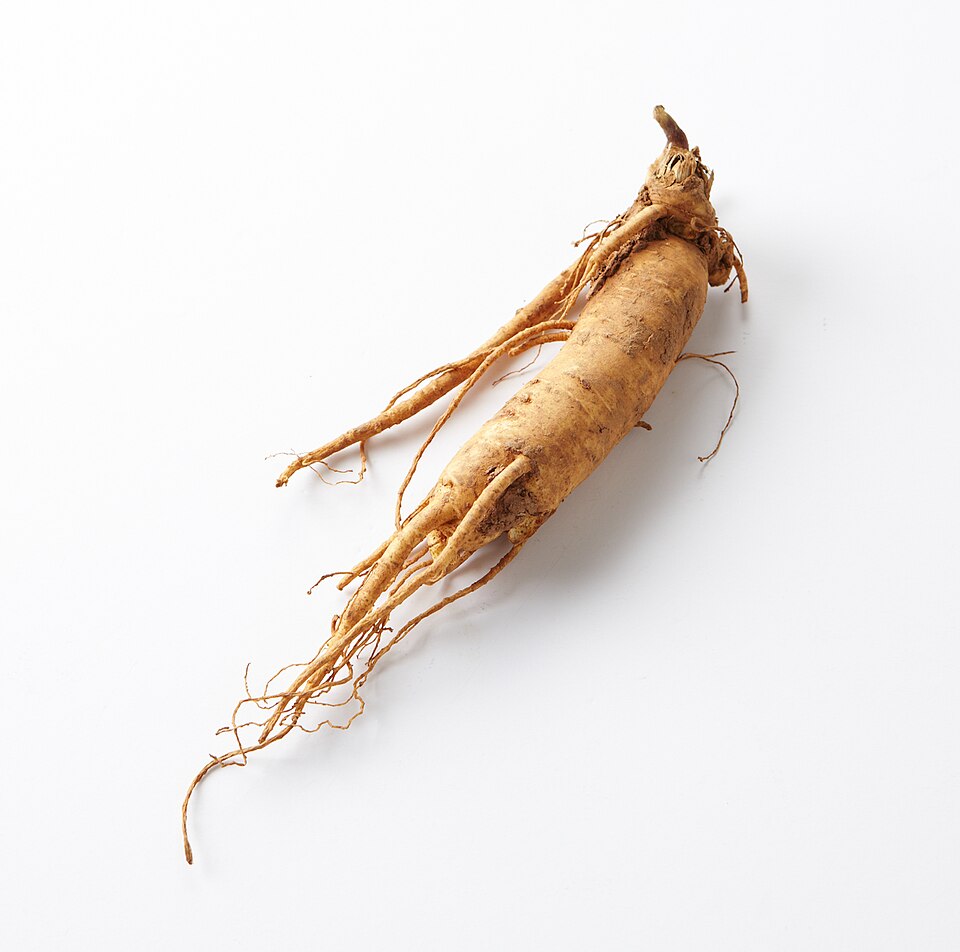
Ren Shen
人参 Ren Shen
Ginseng Radix et Rhizoma
💊 Actions
Strongly tonifies original qi, nourishes the spleen and lungs, generates fluids and quenches thirst, calms the spirit and boosts intelligence. The most important tonic herb in Chinese medicine.
Contraindications
Contraindicated for patients with excess heat and uncontrolled high blood pressure. Do not use with radish or strong tea. Contraindicated for children unless prescribed by a physician.
📖 Usage & Dosage
Simmer 3-9 grams over low heat for 30-60 minutes. May be chewed or ground into powder and eaten. Best taken in the morning.
📖 In-Depth Guide
What Is Ren Shen (Ginseng)?
Ren Shen is the root of Panax ginseng, recorded in pharmaceutical Latin as Ginseng Radix et Rhizoma. In English it is called ginseng, most precisely Asian or Korean ginseng. Cultivated roots are harvested after several years of growth and are used in several preparations: dried as white ginseng or steamed and dried as red ginseng. Whole roots, slices, powder, and decoction pieces are all available.
The root is valued for its characteristic shape and its concentrated, sweet-bitter taste, and aged or wild roots can be extremely expensive. In Chinese medicine Ren Shen is regarded as the most important tonic herb, which means it is treated with respect and selected carefully rather than taken daily by everyone. It should not be confused with American ginseng, which is a different species with different properties.
TCM Properties and Actions
Ren Shen is warm in nature and sweet and slightly bitter in flavor. It enters the Spleen, Lung, Heart, and Kidney channels. Within Chinese medicine it is the leading substance for strongly tonifying original qi, the deep, foundational energy understood to support the whole body.
Its recorded actions are to strongly tonify original qi, nourish the spleen and lungs, generate fluids and quench thirst, and calm the spirit and boost intelligence. It is considered the most important tonic herb in Chinese medicine. It is traditionally reserved for pronounced deficiency: profound weakness, shallow breathing, a weak pulse, loss of appetite, and fatigue after serious illness, childbirth, or old age. The fluid-generating action addresses thirst and dryness in an exhausted, deficient pattern, while the spirit-calming action is associated with restless sleep, forgetfulness, and palpitations understood as deficient qi and spirit. These are pattern-based uses, not general stimulation for healthy people.
Traditional Use and Common Combinations
Ren Shen appears in famous emergency and tonifying formulas for qi collapse and severe deficiency, and in gentler combinations with spleen-tonifying herbs for chronic weak digestion and fatigue. It is also paired with yin-nourishing substances when deficiency includes thirst and dryness, and with calming herbs for restless sleep. In food therapy, small amounts may be simmered into chicken soup as a restorative after illness.
Practitioners warn against using it during an acute illness, because a strong tonic can trap an external pathogen in the traditional framework. It is also commonly recommended to avoid radish and strong tea around the time of use, since they are believed to reduce its tonifying effect.
Safety, Contraindications, and Interactions
Ren Shen is contraindicated for patients with excess heat and uncontrolled high blood pressure. Do not use it with radish or strong tea. It is contraindicated for children unless prescribed by a physician. Excess-heat signs include high fever, acute infection, flushing, agitation, and a red tongue; people with controlled hypertension should still seek professional advice.
Insomnia, headaches, palpitations, or raised blood pressure after use indicate that the herb does not suit the user. Ginseng can interact with stimulant, anticoagulant, antidiabetic, and mood-related medications, so anyone taking prescription medicines should consult a qualified practitioner or physician. People experiencing fatigue from modern medical causes should be evaluated rather than self-tonifying.
How TCM Practitioners Use It Today
The source usage is: Simmer 3-9 grams over low heat for 30-60 minutes. May be chewed or ground into powder and eaten. Best taken in the morning. The long, gentle simmer is used to draw out the root, and it is sometimes decocted separately and then combined with the rest of a formula. Morning use is preferred because evening use may disturb sleep in sensitive people. This guide is educational and does not replace diagnosis or treatment by a qualified practitioner or physician.
Frequently asked questions
Is Ren Shen safe during pregnancy?
The record does not recommend it in pregnancy, and it is a strong tonic that should not be self-prescribed at that time. Pregnant women should consult an obstetric professional before using ginseng in any form.
Can Ren Shen replace prescription medication?
No. Ginseng is a traditional tonic for deficiency patterns and cannot replace prescribed medicines, including treatment for high blood pressure, diabetes, depression, or heart disease.
What is the difference between Ren Shen and Xi Yang Shen?
Ren Shen is Asian ginseng, warm in nature and used to strongly tonify qi in cold-type deficiency. Xi Yang Shen, American ginseng, is cooler and is used to nourish qi and yin with less warming action, making it more suitable for deficiency accompanied by heat.
🏠 Ginseng
Ginseng is not a native Arab herb, but it has become well known in the Gulf as a general tonic. It is imported from Korea and China and sold in major herbalist shops.
💊 Formulas with this herb
🧭 Explore more
🌿 Related Herbs
Related conditions
Medical disclaimer: this content is for health education only and does not constitute diagnosis or treatment advice. Consult a qualified healthcare practitioner before use; some herbs may interact with medications and require special caution during pregnancy or breastfeeding.