Note: the actions, contraindications and usage sections are currently published in Arabic (primary market content); translations are in progress. Herb name, nature, taste and meridians are shown as is.
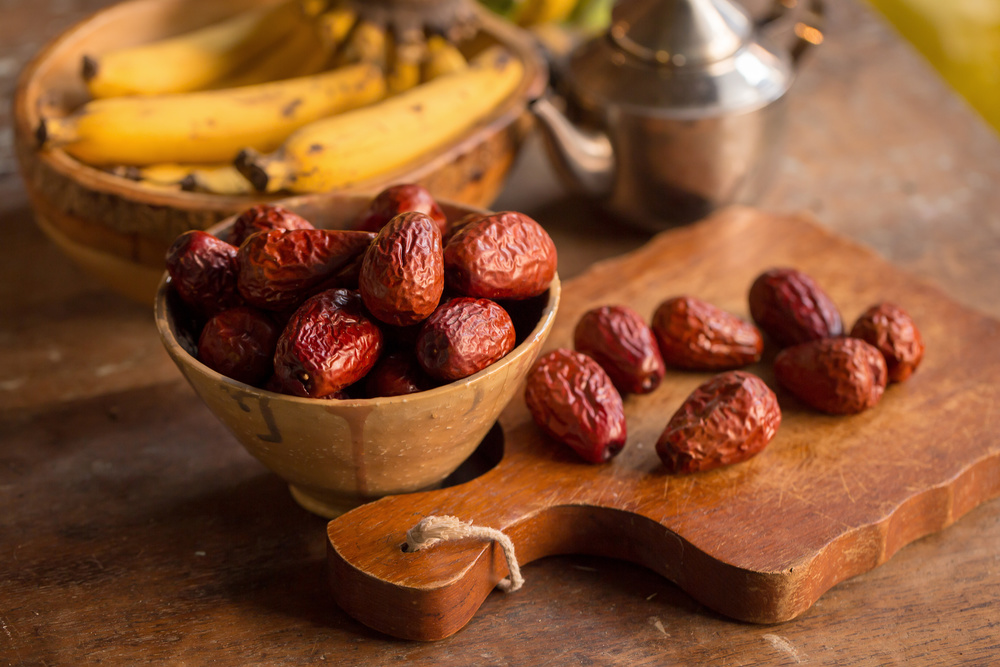
Da Zao
大枣 Da Zao
Jujubae Fructus
💊 Actions
Strengthens the spleen and stomach, nourishes the blood and calms the spirit, harmonizes other medicines. Used for general weakness, anemia, and insomnia.
Contraindications
Contraindicated in large amounts for diabetic patients, and contraindicated for those with excessive phlegm-dampness and bloating.
📖 Usage & Dosage
Take 3-12 pieces daily, or decoct in water with other herbs. Remove the pit before medicinal use.
📖 In-Depth Guide
What Is Da Zao (Jujube)?
Da Zao is the dried ripe fruit of Ziziphus jujuba, recorded in pharmaceutical Latin as Jujubae Fructus. Its common English names are Chinese jujube, red date, and Chinese date. The fruits are oval, wrinkled when dried, and deep reddish-brown, with sweet, soft flesh around a hard central pit. They are harvested when ripe and usually dried before use.
Before medicinal use the pit is removed, and the prepared flesh is then added to formulas, congee, teas, and tonic soups. Because of its gentle sweetness, Da Zao is one of the most approachable herbs in the Chinese pantry and is eaten as a food as well as prescribed as a medicine. It should not be confused with the date palm fruit of the Middle East, which comes from a different plant, even though both are sweet, nourishing fruits.
TCM Properties and Actions
Da Zao is warm in nature and sweet in flavor, and it enters the Spleen, Stomach, and Heart channels. In Chinese medicine, sweet, warm fruits that enter these channels are understood to support weak digestion, gently supplement, and soothe rather than strongly drive.
Its recorded actions are to strengthen the spleen and stomach, nourish the blood and calm the spirit, and harmonize other medicines. The spleen-strengthening action is directed at patterns of weak appetite, tiredness, and loose stools following illness or long-term strain. The blood-nourishing and spirit-calming action is associated with pale complexion, restless sleep, and emotional lability understood in Chinese medicine as a blood-deficiency pattern. Its harmonizing role is perhaps the most common in practice: Da Zao is added to many formulas to protect the stomach, balance stronger herbs, and improve the taste of a decoction.
Traditional Use and Common Combinations
Da Zao appears frequently in classical formulas as a supporting ingredient rather than the chief herb. It is commonly paired with fresh ginger to protect the stomach and harmonize the interior when other strong herbs are used, and it is cooked with blood and qi tonics for general weakness after illness or childbirth. In food therapy, a small handful is simmered in congee, millet porridge, or chicken soup, sometimes with goji fruit or longan, for gentle nourishment.
The traditional terms anemia and insomnia point to symptom patterns treated within this system. They do not mean the fruit replaces evaluation of diagnosed blood disorders or serious sleep disease, which require conventional assessment.
Safety, Contraindications, and Interactions
Although Da Zao is a food for most people, it is not harmless in unlimited quantity. It is contraindicated in large amounts for diabetic patients because of its natural sugar content, and it is contraindicated for those with excessive phlegm-dampness and bloating. In practice this second warning applies to people with a sense of abdominal fullness, heavy, sluggish feelings, thick tongue coating, and a tendency toward damp retention; the cloying sweetness can worsen such stagnation.
People with diabetes should count these fruits as a sweet food and coordinate their intake with their clinician rather than using them as an unrestricted tonic. Dental care after eating the sticky fruit is sensible. Anyone with unexplained weight loss, severe fatigue, or persistent insomnia should seek medical evaluation rather than relying on fruit alone.
How TCM Practitioners Use It Today
The source usage is: Take 3-12 pieces daily, or decoct in water with other herbs. Remove the pit before medicinal use. Practitioners most often add the pitted fruits to a combined decoction or recommend measured amounts in congee and tonic soups, and they avoid large quantities in damp, bloated, or sugar-sensitive patients. This guide is educational and does not replace diagnosis or treatment by a qualified practitioner or physician.
Frequently asked questions
Is Da Zao safe during pregnancy?
Small food amounts are commonly used, but the record does not make a specific medicinal recommendation for pregnancy. Pregnant women should keep intake modest and ask a qualified practitioner or obstetric professional before using it as a tonic.
Can Da Zao replace prescription medication?
No. Jujube is a gentle food herb used to support digestion and nourishment in traditional patterns. It cannot replace prescribed treatment for anemia, diabetes, insomnia, or any other medical condition.
What is the difference between Da Zao and Arabian date?
Da Zao is the fruit of Ziziphus jujuba, the Chinese jujube, used in Chinese formulas and always pitted for medicine. The Arabian date comes from the date palm, Phoenix dactylifera. Both are sweet, nourishing fruits, but they are different plants with different traditional roles.
🏠 Date Palm / Jujube
Dates are a staple food in the Arab world, mentioned in the Quran and Sunnah. Although the Chinese jujube differs slightly from the Arabian date, both are used to strengthen blood and energy. Arabs eat dates on an empty stomach to gain energy throughout the day.
💊 Formulas with this herb
🧭 Explore more
🌿 Related Herbs
Related conditions
Medical disclaimer: this content is for health education only and does not constitute diagnosis or treatment advice. Consult a qualified healthcare practitioner before use; some herbs may interact with medications and require special caution during pregnancy or breastfeeding.