🌙 Ramadan and Traditional Chinese Medicine: An Integrated Health Program for the Month of Fasting
🌙 Ramadan and Health: A Traditional Chinese Medicine Perspective
Fasting exists in all cultures and civilizations. In Traditional Chinese Medicine, intermittent fasting has been known for thousands of years as a powerful therapeutic tool. Ramadan offers a unique opportunity — 30 days of "resetting" the body.
How Does Traditional Chinese Medicine Understand Fasting?
In Traditional Chinese Medicine, digestion consumes "digestive energy." When you fast, this energy is freed up for other tasks:
- The first week: Detoxification — the body begins burning its reserves
- The second week: Adaptation — the body adjusts to the new system
- The third week: Balance — reaching the optimal state
- The fourth week: Consolidation — cementing the benefits
The Ideal Suhoor (封斋饭)
Suhoor is more important than Iftar! It is the fuel for an entire day.
Ideal foods for Suhoor:
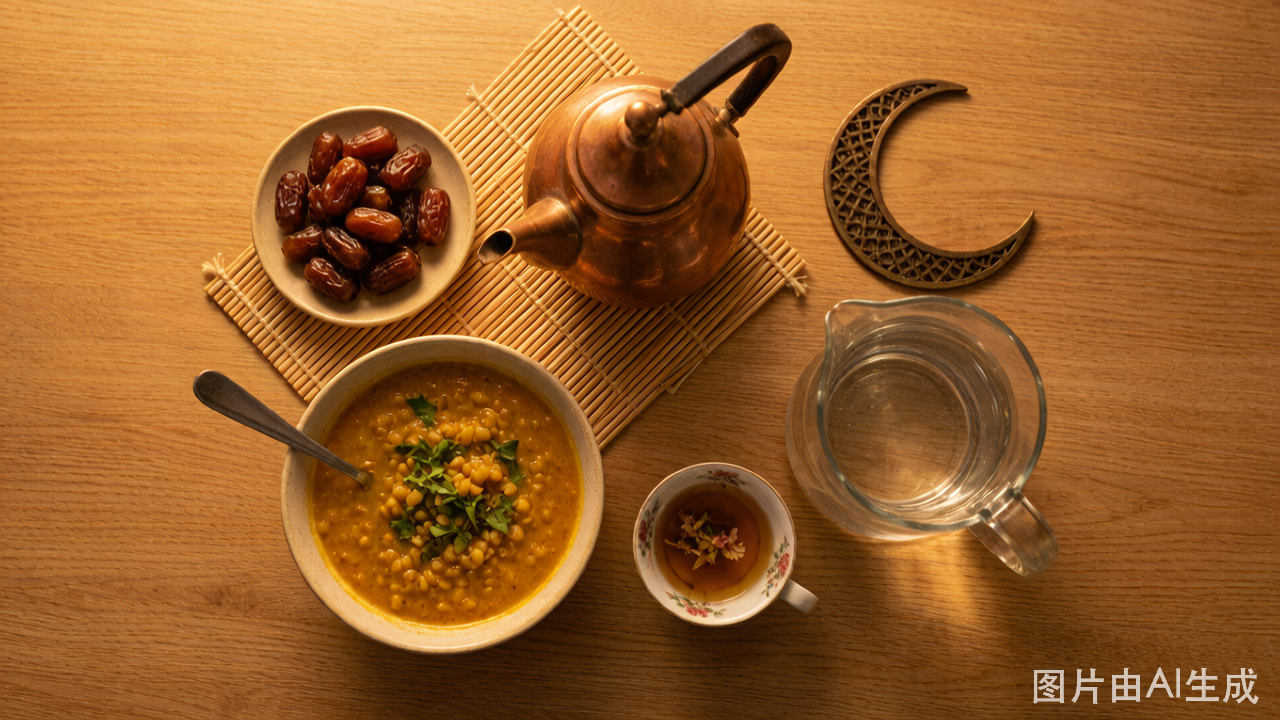
- Dates (3-5 pieces) — slow-release energy
- Yogurt — protein and probiotics
- Boiled eggs — complete protein
- Whole wheat bread — fiber for satiety
- Banana — potassium to prevent thirst
- Plenty of water — at least 3-4 cups
Avoid at Suhoor:
- Excess salt — causes thirst
- Simple sugars — raise insulin then crash
- Caffeine — diuretic
Balanced Iftar (开斋饭)
Begin Iftar slowly — your stomach has been at rest all day.
The ideal order for Iftar:
- 1. Dates + water — break the fast gently
- 2. Warm soup — warm the stomach (lentil soup is ideal)
- 3. Maghrib prayer — a rest for the digestive system
- 4. The main meal — protein + vegetables + complex carbohydrates
- 5. Fruit after an hour — natural sweetness
Recipes for Suhoor and Iftar
The ideal Suhoor smoothie: Banana + dates + almond milk + oats + a pinch of cinnamon
Chinese Iftar soup: Chicken + red jujube (红枣) + goji berries (枸杞) + ginger + rice
Ramadan Problems and Their Solutions
| Problem | Cause | Chinese Solution |
| --------- | -------- | ------------ |
| Indigestion | Eating quickly and too much | Massage point ST36 + ginger tea |
| Constipation | Lack of water and fiber | Dates + flaxseed + plenty of water |
| Headache | Caffeine/fluid deficiency | Point LI4 + drinking water gradually |
| Insomnia | Disruption of the biological clock | Avoid screens before sleep + chamomile tea |
| Lethargy | Lack of energy | A 20-minute nap + breathing exercises |