Note: the actions, contraindications and usage sections are currently published in Arabic (primary market content); translations are in progress. Herb name, nature, taste and meridians are shown as is.
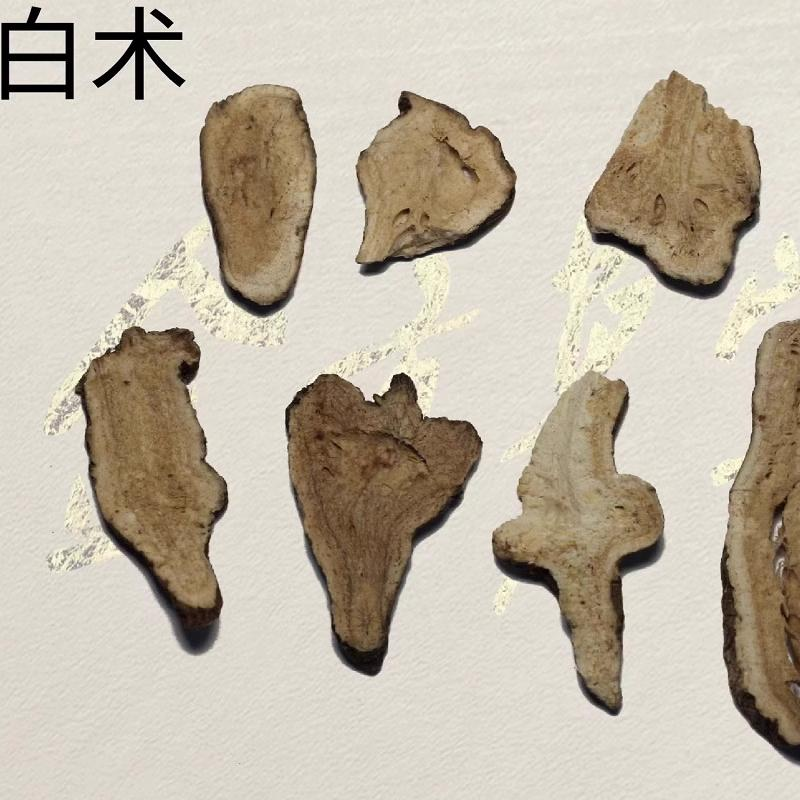
Bai Zhu
白术 Bai Zhu
Atractylodis Macrocephalae Rhizoma
💊 Actions
Strengthen the spleen and generate qi, dry dampness and promote diuresis, stabilize the fetus. Used for weak digestion, distention, diarrhea, and fluid retention.
Contraindications
Contraindicated for patients with fluid dryness and yin deficiency. Contraindicated for patients with internal heat accompanied by thirst.
📖 Usage & Dosage
Decoct 6-12 grams with other herbs. It can be dry-fried to strengthen its effect on the spleen.
📖 In-Depth Guide
What Is Bai Zhu (White Atractylodes)?
Bai Zhu is the dried rhizome of Atractylodes macrocephala, recorded in pharmaceutical Latin as Atractylodis Macrocephalae Rhizoma. In English it is called white atractylodes. The medicinal pieces are irregular, firm, yellowish-white rhizome slices with an aromatic, slightly bitter fragrance.
The rhizome is dried after harvesting and may be used in its raw form or dry-fried, sometimes with bran or earth, for clinical use. In Chinese medicine Bai Zhu belongs to a small family of spleen-focused herbs and should not be confused with Cang Zhu, the rhizome of a related species, which has a stronger dampness-drying action. Outside Chinese practice, atractylodes is less familiar, although it increasingly appears in traditional Chinese medicine centers and complementary-health settings.
TCM Properties and Actions
Bai Zhu is warm in nature and bitter and sweet in flavor, entering the Spleen and Stomach channels. These channels govern digestion and the transformation and movement of fluids in Chinese medicine.
Its recorded actions are to strengthen the spleen and generate qi, dry dampness and promote diuresis, and stabilize the fetus. It is used for weak digestion, distention, diarrhea, and fluid retention. The spleen-strengthening action addresses poor appetite, tiredness, and loose stools in a deficient pattern. The dampness-drying and diuretic action is directed at heavy sensations, abdominal fullness, phlegm-fluid accumulation with dizziness and palpitations, and edema. Spontaneous sweating from defensive weakness is also traditionally addressed with this herb, and its fetus-stabilizing action applies specifically when a qualified practitioner diagnoses a spleen-deficiency pattern associated with restless fetus. It must not be self-prescribed in pregnancy.
Traditional Use and Common Combinations
Bai Zhu is one of the core herbs in classical spleen-tonifying and damp-draining formulas. It is commonly paired with Huang Qi and other qi tonics for weak digestion, fatigue, and spontaneous sweating; with damp-draining herbs such as Fu Ling for edema and loose stools; and with wind-releasing ingredients for deficient patients who sweat easily and catch colds readily. The dry-fried form is traditionally chosen when strengthening the spleen and stopping diarrhea are the priority, while the raw form is preferred when promoting diuresis and drying dampness are emphasized.
These traditional indications describe imbalances within the Chinese diagnostic system. Persistent diarrhea, significant edema, or recurrent dizziness requires medical evaluation and should not be managed with a single herb.
Safety, Contraindications, and Interactions
Bai Zhu is contraindicated for patients with fluid dryness and yin deficiency. It is also contraindicated for patients with internal heat accompanied by thirst. In practice, this means it is avoided in dry, hot presentations with symptoms such as thirst, dry mouth, night sweats, constipation, and a dry or red tongue, because its warm, drying quality can make such patterns worse.
Pregnant women should not use this herb on their own, even though one of its traditional actions is described as stabilizing the fetus; that use belongs entirely to a diagnosed pattern under professional care. Anyone with significant fluid imbalance, kidney disease, or persistent digestive symptoms should consult a qualified practitioner or physician.
How TCM Practitioners Use It Today
The source usage is: Decoct 6-12 grams with other herbs. It can be dry-fried to strengthen its effect on the spleen. Practitioners choose between raw and dry-fried forms based on whether dampness draining or spleen strengthening is the priority, and they combine it rather than prescribe it alone for long periods. This guide is educational and does not replace diagnosis or treatment by a qualified practitioner or physician.
Frequently asked questions
Is Bai Zhu safe during pregnancy?
It should not be self-used during pregnancy. Although stabilizing the fetus is one of its traditional actions, that application requires a practitioner's specific pattern diagnosis, and pregnant women should seek professional advice.
Can Bai Zhu replace prescription medication?
No. White atractylodes is a traditional spleen and dampness herb. It cannot replace prescribed treatment for digestive disease, edema, or other diagnosed conditions.
What is the difference between Bai Zhu and Cang Zhu?
Bai Zhu, from Atractylodes macrocephala, focuses on tonifying the spleen and is also used to stabilize the fetus. Cang Zhu is more strongly drying and aromatic, used primarily to expel dampness, and is less of a tonic.
🏠 Atractylodes
Atractylodes is less well known in traditional Arab folk medicine, but it has recently been used in alternative medicine and TCM centers in the UAE and Saudi Arabia.
💊 Formulas with this herb
🧭 Explore more
🌿 Related Herbs
Related conditions
Medical disclaimer: this content is for health education only and does not constitute diagnosis or treatment advice. Consult a qualified healthcare practitioner before use; some herbs may interact with medications and require special caution during pregnancy or breastfeeding.