Note: the actions, contraindications and usage sections are currently published in Arabic (primary market content); translations are in progress. Herb name, nature, taste and meridians are shown as is.
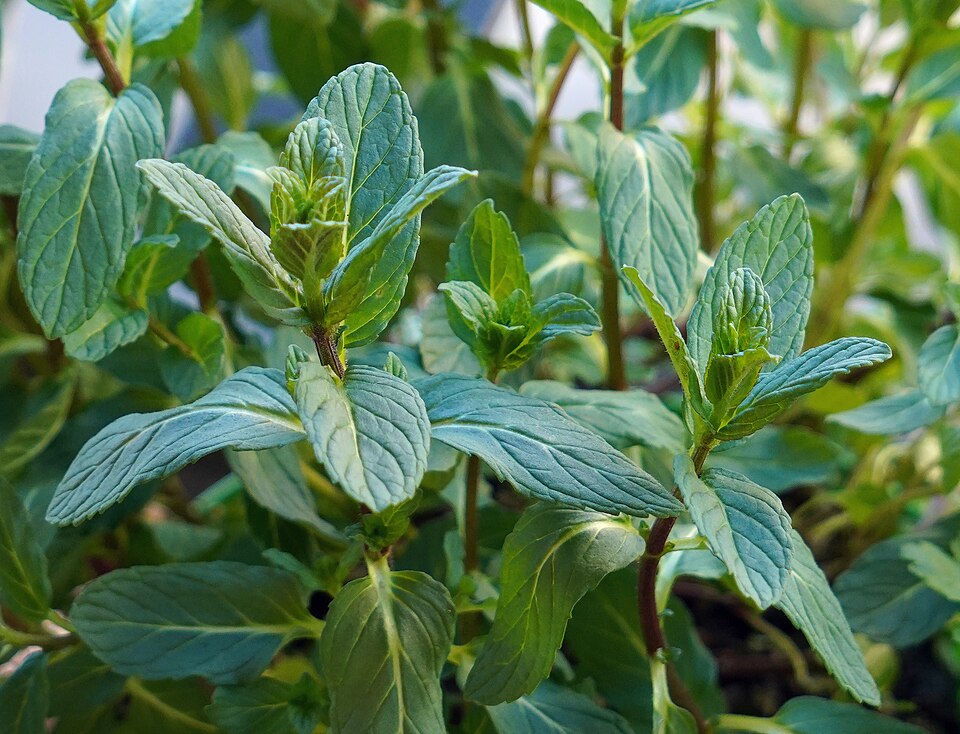
Bo He
薄荷 Bo He
Menthae Haplocalycis Herba
💊 Actions
Disperse wind-heat, clear the head and eyes, promote eruption of rashes, facilitate the flow of liver qi. Used for headache, sore throat, and common cold.
Contraindications
Contraindicated for patients with yang deficiency and night sweats. Do not decoct for a long time (volatile oils are lost). Contraindicated for infants.
📖 Usage & Dosage
Add 3-6 grams in the last minute of decoction (to preserve volatile oils). Drink as a refreshing tea.
📖 In-Depth Guide
What Is Bo He?
Bo He (Menthae Haplocalycis Herba) is the aerial part of field mint, Mentha haplocalyx, a strongly aromatic perennial herb in the mint family. The stems and leaves are harvested in summer and autumn in clear weather, dried in the shade, and used whole or cut. Its characteristic cooling sensation comes from volatile oils rich in menthol. Mint is one of the most cosmopolitan of herbs: it is used in Chinese medicine, in European and Middle Eastern herbal teas and cooking, and in sweetened green mint tea across North Africa. In TCM its pinyin name is Bo He.
TCM Properties and Actions
Bo He is cool in nature and acrid, meaning piquant, in flavor, and it enters the lung and liver meridians. Its recorded actions are to disperse wind-heat, clear the head and eyes, promote the eruption of rashes, and facilitate the flow of liver qi. Traditionally it is used at the early stage of a wind-heat common cold marked by fever with slight aversion to wind, headache, red and painful eyes, and a sore, swollen throat; the light, aromatic herb is understood to move upward and outward, opening the body's surface. Its liver-qi action addresses distending discomfort in the chest and flanks, emotional tension, and irregular appetite associated in TCM theory with constrained qi. It is also traditionally used to encourage the expression of incomplete rashes, such as measles, and to refresh the mouth.
Traditional Use and Common Combinations
For wind-heat colds and sore throats, Bo He is classically combined with Jin Yin Hua (honeysuckle), Lian Qiao (forsythia), Niu Bang Zi (burdock fruit), and Jing Jie (schizonepeta) in surface-releasing formulas. For headache and red, irritated eyes, it is paired with Ju Hua (chrysanthemum), Sang Ye (mulberry leaf), and Man Jing Zi (vitex fruit). For emotional constraint with flank and breast distention, it is combined with Chai Hu (bupleurum), Bai Shao (white peony), and Dang Gui in liver-spreading formulas. As a beverage, a few fresh or dried leaves are steeped, never boiled for long, as a refreshing tea. These uses are traditional pattern descriptions; a high fever, breathing difficulty, or severe sore throat requires medical assessment.
Safety, Contraindications, and Interactions
Bo He is contraindicated for patients with yang deficiency and night sweats, and it is contraindicated for infants. Its cool, dispersing quality can further drain people who are already cold, tired, and deficient; those who sweat heavily at night or spontaneously, who have cold limbs and a weak pulse, or who feel cold much of the time should not use it medicinally. Infants should not be given mint preparations internally, and concentrated menthol products should not be applied to an infant's face or chest.
Do not decoct Bo He for a long time, because its active volatile oils are lost with prolonged cooking; it is added late. Some people find strong mint or menthol irritating to the stomach or may experience allergic reactions; stop use if discomfort or rash occurs. Pregnant and breastfeeding women should use it only under professional guidance.
How TCM Practitioners Use It Today
The recorded method: Add 3-6 grams in the last minute of decoction (to preserve volatile oils). Drink as a refreshing tea. Fresh mint is sometimes regarded as especially strong for the head and throat. Dosing and pairing are determined by the individual pattern, and it is most often used as one ingredient within a larger formula.
This guide is for educational purposes only and is not a substitute for advice from a qualified healthcare professional.
Frequently asked questions
Is Bo He safe during pregnancy? Medicinal mint should not be self-used during pregnancy or breastfeeding; a pregnant woman with a cold or sore throat should consult her obstetric provider and a qualified practitioner. Food-level amounts in ordinary tea should also be discussed in the setting of pregnancy complications.
Can Bo He replace prescription medication? No. It may provide traditional support for mild wind-heat symptoms but cannot replace antibiotics, antivirals, or other prescribed treatment for infections, migraine, or allergic disease. Seek prompt care for high fever, breathing difficulty, or difficulty swallowing.
What is the difference between Bo He and Jing Jie? Both are light, aromatic herbs that release the body surface and help rashes to express. Bo He is distinctly cool and focuses on the head and eyes, sore throat, headache, and red eyes, while also spreading liver qi to ease emotional and flank tension. Jing Jie (Schizonepeta) is slightly warm in the traditional view and is used for both wind-cold and wind-heat patterns; its charred form is additionally used to address bleeding. A practitioner chooses based on the heat or cold character of the illness.
🏠 Mint
Mint is one of the most important herbs in Arab culture, used to make authentic Moroccan tea (atay). It is used in folk medicine for indigestion and bloating, and is grown in most Arab homes and offered to guests as a symbol of welcome.
💊 Formulas with this herb
🧭 Explore more
🌿 Related Herbs
Related conditions
Medical disclaimer: this content is for health education only and does not constitute diagnosis or treatment advice. Consult a qualified healthcare practitioner before use; some herbs may interact with medications and require special caution during pregnancy or breastfeeding.