Note: the actions, contraindications and usage sections are currently published in Arabic (primary market content); translations are in progress. Herb name, nature, taste and meridians are shown as is.
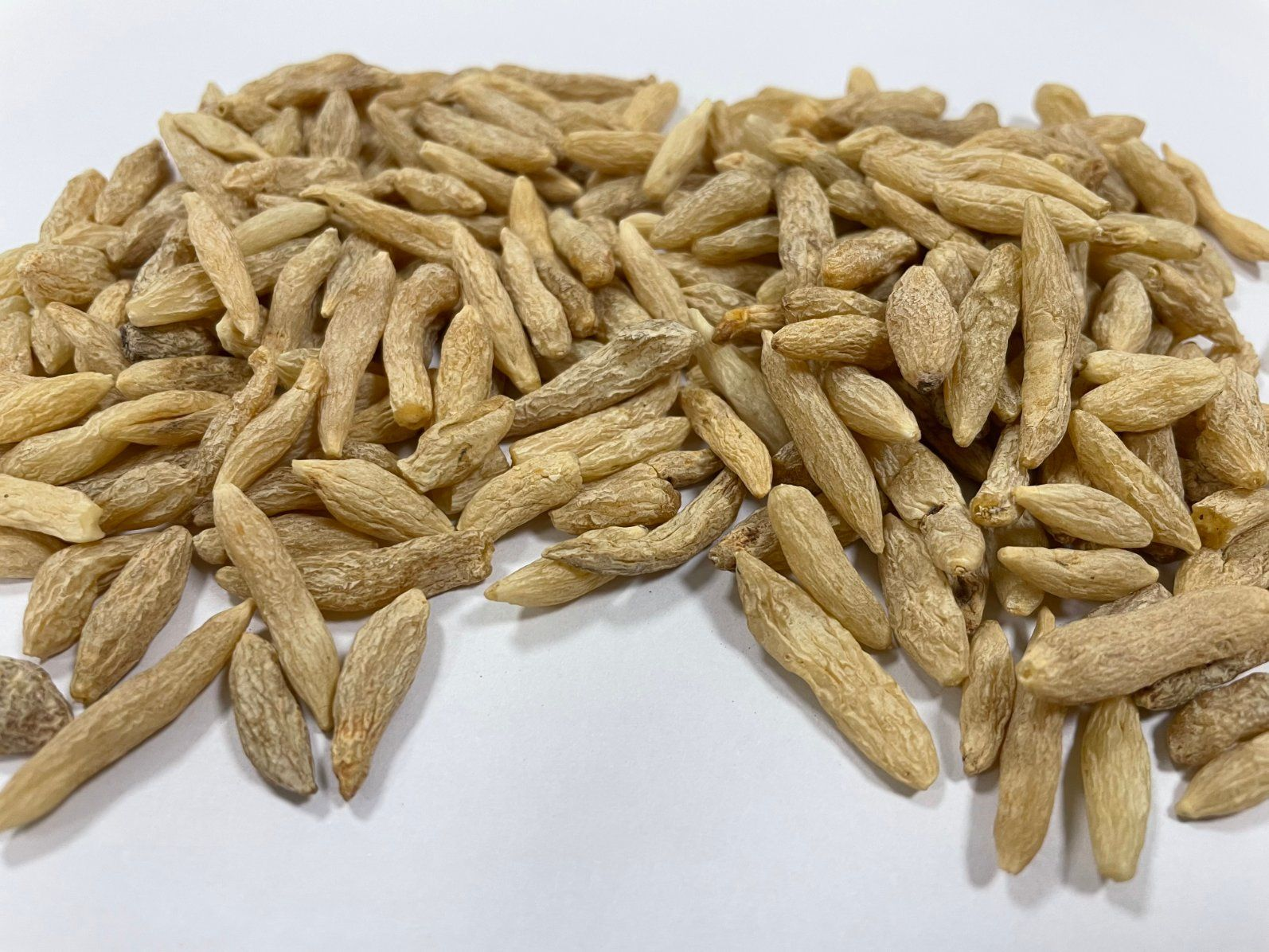
Mai Dong
麦冬 Mai Dong
Ophiopogonis Radix
💊 Actions
Nourishes yin, moistens the lungs, and generates fluids; for summer dry cough, thirst, and restlessness with insomnia.
Contraindications
Contraindicated in cases of coldness with diarrhea.
📖 Usage & Dosage
6-12 grams, steeped as tea.
📖 In-Depth Guide
What Is Mai Dong (Ophiopogon Tuber)?
Mai Dong (pinyin: mai dong), whose pharmaceutical name is Ophiopogonis Radix, is the dried root tuber of Ophiopogon japonicus, a small, grass-like evergreen perennial widely grown as a ground cover in East Asia. In English it is called ophiopogon tuber or mondo grass tuber. The dried herb appears as small, translucent, yellowish-white, spindle-shaped tubers that feel soft and slightly sticky when chewed, with a sweet taste and only faint bitterness. The roots are harvested, cleaned, and dried; a form with the small central core removed is also seen in the trade.
Because of its gentle, sweet character, Mai Dong is one of the more approachable yin-nourishing herbs, and it is commonly steeped as a tea, especially in summer and dry weather. It is used both in classical formulas and in everyday beverage-style preparations.
TCM Properties and Actions
Mai Dong is slightly cold in nature, sweet and slightly bitter in flavor, and it enters the Heart, Lung, and Stomach meridians. Its recorded actions are to nourish yin, moisten the Lungs, and generate fluids. In TCM, yin and fluids are the body's moistening, cooling, nourishing dimension; when they are depleted, signs of dryness and mild heat appear.
Its Lung action is traditionally directed at a dry cough with little or sticky sputum and a dry throat, the kind of cough associated with dry weather or depleted Lung yin rather than with a heavy cold. Its Stomach action addresses injury to fluids, seen as thirst, a dry mouth, and a lack of moisture. Through the Heart meridian it is also used when deficient heat is associated with irritability, restlessness, and insomnia. Mai Dong is thus a moistening, cooling herb rather than a sweating or surface-releasing one.
Traditional Use and Common Combinations
Traditionally, Mai Dong is chosen for dryness patterns: dry cough with scant sticky sputum, dry throat and mouth, and thirst, particularly after hot weather or a febrile illness when fluids are felt to have been consumed. It is also used for the class of restlessness and insomnia attributed to heat from yin deficiency, often with a degree of palpitations. It is a core ingredient in several textbook formulas for Lung and Stomach dryness and for heart-nourishing, spirit-settling combinations, and practitioners commonly pair it with other yin- and fluid-nourishing herbs.
In everyday food therapy it is steeped with other gentle moistening ingredients as a dry-season or summer tea. These uses belong to traditional pattern reasoning: thirst, persistent cough, or insomnia can also be signs of conditions that require modern medical evaluation, including diabetes or respiratory disease, and should not be self-diagnosed from traditional descriptions alone.
Safety, Contraindications, and Interactions
The source record states that Mai Dong is contraindicated in cases of coldness with diarrhea. Because it is slightly cold, moistening, and somewhat cloying, it can aggravate the pattern known as Spleen and Stomach deficiency-cold, in which the abdomen feels cold, the appetite is poor, and the stools are loose or watery. People with chronic loose stools or phlegm-damp patterns, including cough with large amounts of white watery sputum and a heavy, greasy tongue coating, should not use it as a routine tea without professional advice.
Allergy to the plant is a reason to avoid it. Pregnant or breastfeeding women, children, older adults, and people taking ongoing medication, especially medication for blood sugar or other chronic conditions, should consult a qualified practitioner before using Mai Dong medicinally.
How TCM Practitioners Use It Today
The source usage is 6-12 grams, steeped as tea. Within a formula a practitioner chooses the amount according to the pattern and combines it with other herbs; it should not be combined with self-prescribed medication or taken in larger amounts to chase faster results.
This guide is educational and does not replace diagnosis or treatment by a qualified healthcare professional. Persistent thirst, weight loss, prolonged cough, chest symptoms, or ongoing insomnia warrant medical evaluation.
Frequently asked questions
Is Mai Dong safe during pregnancy? The source record gives no specific pregnancy guidance. Pregnant or breastfeeding women should not use Mai Dong medicinally on their own; a qualified practitioner can decide whether it fits an individual pattern, and ordinary hydration and medical obstetric care remain the foundation.
Can Mai Dong replace prescription medication? No. Mai Dong is a traditional yin-nourishing herb, not a substitute for prescribed treatment for diabetes, respiratory disease, insomnia, or any other condition. If you take medication, especially blood-sugar medication, coordinate any herbal use with your practitioner or pharmacist.
What is the difference between Mai Dong and Tian Dong? Both are sweet, bitter, cooling tubers that nourish yin, moisten the Lungs, and generate fluids, and they are sometimes used together. Tian Dong, or asparagus root, is considered colder and more strongly bitter, with a stronger focus on nourishing Kidney yin and clearing deficient heat. Mai Dong is lighter; it also enters the Stomach for damaged fluids and thirst and the Heart for restlessness and insomnia.
🏠 ماي دونغ
Common in summer tea; known as a moistening herb.
💊 Formulas with this herb
📚 Related articles
🧭 Explore more
🌿 Related Herbs
Related conditions
Medical disclaimer: this content is for health education only and does not constitute diagnosis or treatment advice. Consult a qualified healthcare practitioner before use; some herbs may interact with medications and require special caution during pregnancy or breastfeeding.