Note: the actions, contraindications and usage sections are currently published in Arabic (primary market content); translations are in progress. Herb name, nature, taste and meridians are shown as is.
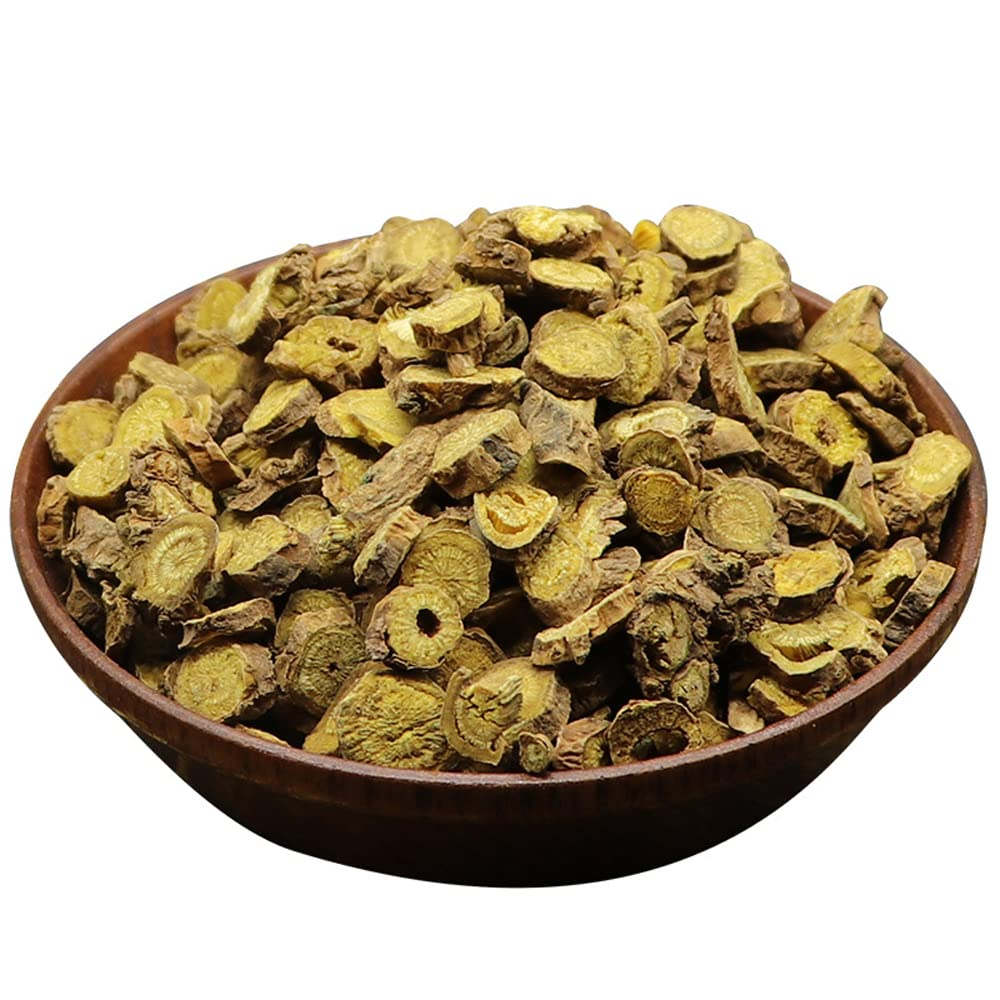
Huang Qin
黄芩 Huang Qin
Radix Scutellariae
💊 Actions
Acts as an anti-inflammatory, antibacterial, and antifungal agent. Clears heat, dries dampness, and removes toxins. Used to treat fever, jaundice, respiratory tract infections, and diarrhea.
Contraindications
Contraindicated in cases of deficiency of qi and cold in the spleen and stomach. Should not be used during pregnancy except under medical supervision.
📖 Usage & Dosage
Daily dosage: 3-10 grams, decocted and taken orally. It can also be used as a powder or tincture. Preferably taken after meals.
📖 In-Depth Guide
What Is Huang Qin (Radix Scutellariae)?
Huang Qin is the dried root of *Scutellaria baicalensis*, known in Western herbal references as baikal skullcap root. Its standard pharmaceutical name is Radix Scutellariae. The root is harvested in spring or autumn, cleaned, sliced, and dried; pieces may appear pale yellow with a fibrous, layered texture. In Chinese herbal medicine it is called Huang Qin, and it belongs to the broad family of heat-clearing, dampness-drying herbs. It is one of the most frequently used bitter-cold roots in the classical formulas, and it is important to distinguish it from similar-sounding herbs such as Huang Lian, which comes from a different plant.
TCM Properties and Actions
Huang Qin is classified as cold in nature and bitter in flavor. It enters the Lung, Gallbladder, Spleen, Large Intestine, and Small Intestine meridians. In traditional theory, its principal actions are to clear heat, dry dampness, drain fire, and resolve toxicity. The record describes it as acting as an anti-inflammatory, antibacterial, and antifungal agent, and notes its traditional association with fever, jaundice, respiratory tract infections, and diarrhea.
In reader-friendly terms, practitioners understand these actions in the language of patterns rather than modern disease labels. The bitter-cold quality is directed at damp-heat conditions, which may present with feelings of heat, sticky discomfort, jaundiced appearance, burning diarrhea, or heat signs in the chest and upper respiratory system. The modern terms "antibacterial" and "antifungal" in the source reflect laboratory and clinical interest in constituents such as the root's flavonoids; they should not be read as a substitute for medical treatment of confirmed infections.
Traditional Use and Common Combinations
Classically, Huang Qin is used when heat and dampness combine, for example in damp-warm or summer-heat patterns with stifling fullness and thirst without a desire to drink, in jaundice associated with damp-heat, and in dysenteric diarrhea with abdominal discomfort. Because it enters the Lung and Gallbladder meridians, it is also used for heat in the upper body, including cough with yellow sputum, feverish sensations, and irritability associated with constraint.
Two well-known textbook pairings reflect this range. With Chai Hu (bupleurum root), Huang Qin helps address the alternating heat and discomfort classically associated with shaoyang-stage patterns. With Ku Xing Ren (bitter apricot seed) and sang bai pi (mulberry root bark), it is directed toward lung-heat cough. In digestive damp-heat formulas it may appear alongside Huang Lian, although the two roots are not interchangeable. These are traditional pattern applications, not claims about treating specific modern infections; jaundice, persistent fever, and significant diarrhea warrant medical assessment rather than self-treatment.
Safety, Contraindications, and Interactions
The safety guidance for this herb must be taken seriously. Huang Qin is contraindicated in cases of deficiency of qi and cold in the spleen and stomach, a pattern often marked by poor appetite, cold or bloating in the abdomen, loose stools, and weakness. Because of its cold and bitter character, it can worsen digestive cold and loose stools when used outside the correct pattern.
It should not be used during pregnancy except under medical supervision. People taking prescription medications, especially for serious or ongoing conditions, should coordinate use with a qualified practitioner or physician rather than combining products on their own. Anyone with a known allergy to plants in the related botanical family should avoid it, and use should be stopped if rash, abdominal pain, or other unusual reactions occur.
How TCM Practitioners Use It Today
In contemporary practice the dried root is most often prepared as a decoction. The source dosage is: Daily dosage: 3-10 grams, decocted and taken orally. It can also be used as a powder or tincture. Preferably taken after meals. A practitioner selects the dose and preparation according to the individual pattern, often combining it within a larger formula rather than using it alone, and reassesses its use because prolonged use of bitter-cold herbs is generally discouraged in deficient patients.
This guide is for educational purposes only and does not replace diagnosis, treatment, or professional medical advice. Qualified practitioners individualize herbs and doses; persistent fever, jaundice, bloody or severe diarrhea, and breathing difficulty require prompt medical care.
Frequently asked questions
Is Huang Qin safe during pregnancy?
It should not be used during pregnancy except under medical supervision. Pregnant or breastfeeding women should consult a qualified practitioner or obstetric professional before taking it, and should not self-dose with decoctions, powders, or tinctures.
Can Huang Qin replace prescription medication?
No. Although the record associates it with anti-inflammatory, antibacterial, and antifungal activity and with fever, jaundice, respiratory infections, and diarrhea, these are traditional and laboratory contexts. It cannot replace antibiotics, antivirals, or other prescribed treatments, and serious symptoms should be evaluated by a clinician.
What is the difference between Huang Qin and Huang Lian?
Both are bitter-cold, heat-clearing, dampness-drying herbs, but they come from different plants. Huang Qin is the root of *Scutellaria baicalensis* and is especially associated with lung and gallbladder heat and upper-body heat, while Huang Lian is the rhizome of *Coptis chinensis*, is even more cold and bitter, and is particularly directed at stomach and heart fire, dysentery, and mouth ulcers.
💊 Formulas with this herb
🧭 Explore more
🌿 Related Herbs
Related conditions
Medical disclaimer: this content is for health education only and does not constitute diagnosis or treatment advice. Consult a qualified healthcare practitioner before use; some herbs may interact with medications and require special caution during pregnancy or breastfeeding.