Note: the actions, contraindications and usage sections are currently published in Arabic (primary market content); translations are in progress. Herb name, nature, taste and meridians are shown as is.
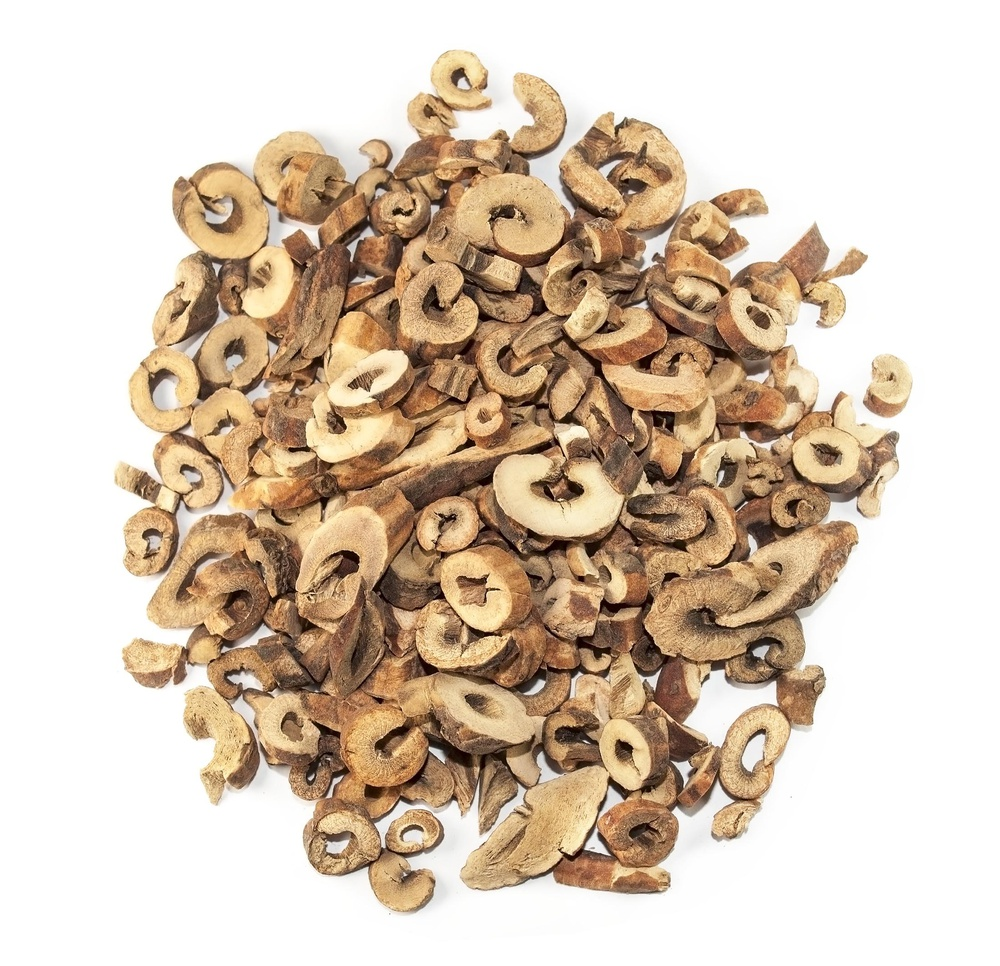
Mu Dan Pi
牡丹皮 Mu Dan Pi
Moutan Cortex
💊 Actions
Cools the blood and moves it simultaneously, and lowers liver fire; for hot bleeding, blood masses, and high blood pressure.
Contraindications
Contraindicated in pregnancy and in cold heavy menstruation.
📖 Usage & Dosage
6-12 grams.
📖 In-Depth Guide
What Is Mu Dan Pi (Moutan Cortex, Tree Peony Bark)?
Mu Dan Pi is the root bark of Paeonia suffruticosa Andrews, the tree peony, recorded in pharmaceutical Latin as Moutan Cortex. Its pinyin name Mu Dan Pi means "peony bark," and it is commonly called moutan bark or tree peony root bark in English. The tree peony is one of the most celebrated ornamental flowers in China, but it is the stripped and dried root bark, not the flower, that enters the pharmacy.
The herb reaches the market as thin, curled, tubular pieces of bark, pale brown on the outside and lighter, finely grooved on the inside, with a characteristic aromatic, slightly bitter taste. Roots are traditionally harvested in autumn, the bark is separated from the woody core, and it is dried and used either unprocessed or stir-fried; the unprocessed form is the one most associated with its cooling action. Mu Dan Pi should not be confused with the root of the herbaceous white peony, which is a different part of a different plant with a different role.
TCM Properties and Actions
Mu Dan Pi is slightly cold in nature and bitter and acrid, or pungent, in flavor. It enters the Heart, Liver, and Kidney channels. In the traditional framework, bitter and cold clears heat while acridity gives the herb a dispersing, moving quality, a combination summed up in the recorded statement that it cools the blood and moves it at the same time.
Its core actions are to clear heat and cool the blood, invigorate blood and disperse stasis, and drain liver fire. Cooling the blood is directed at what the tradition calls heat in the blood level: patterns marked by a sensation of heat, nose or gum bleeding, bleeding under the skin, or menstrual bleeding attributed to blood heat. Its blood-moving side addresses blood stasis, meaning fixed pain, palpable masses, and menstrual discomfort from stagnation, and the two actions together explain why the same herb is traditionally chosen when heat and stasis appear together. Draining liver fire refers to patterns with irritability, flushed face, headache, red eyes, and heat in the upper body; this traditional presentation can accompany elevated blood pressure, although Mu Dan Pi is not a management for hypertension and does not replace prescribed cardiovascular care. A related traditional use, supported by its Kidney entry, is the afternoon heat and steaming-sensation pattern of yin deficiency heat, most often in formulas rather than as a single herb.
Traditional Use and Common Combinations
In classical practice Mu Dan Pi appears in formulas for blood-heat bleeding, menstrual irregularity attributed to heat and stasis, and lingering low-grade fever after illness. It is paired with other blood-cooling or blood-moving herbs according to the pattern, for example alongside Sheng Di Huang, raw rehmannia, when heat in the blood dominates, or with Chi Shao, red peony root, when stasis pain is prominent. For liver fire headache and flushing it is combined with herbs that clear liver heat, and for deficiency-type evening heat it appears in balanced yin-nourishing formulas.
These are pattern-based uses, not diagnoses. "Blood heat" and "blood stasis" are traditional descriptions of symptom clusters, and any unexplained bleeding, palpable abdominal mass, persistent fever, or markedly high blood pressure requires medical evaluation rather than self-use of this herb.
Safety, Contraindications, and Interactions
Mu Dan Pi is contraindicated in pregnancy and in cold heavy menstruation. Cold heavy menstruation refers to heavy periods accompanied by cold-type signs such as pale, thin blood, abdominal pain that improves with warmth, cold limbs, and fatigue; in that setting its cooling and moving nature is considered inappropriate. Because it moves blood and cools, people with blood-deficiency or cold-digestive patterns, and those taking anticoagulant or antiplatelet medication, should only use it under professional supervision. Discontinue it before surgery as advised by a physician. Stop use and seek advice if digestive discomfort, rash, or unusual bleeding occurs.
How TCM Practitioners Use It Today
The source dosage is 6-12 grams. Practitioners most often prescribe it as one component of a decocted formula, with the exact dose chosen for the individual pattern; prepared forms such as pills and powders may also be used. It is rarely appropriate as a long-term single-herb tea, especially for people who tend to feel cold. This guide is for education only and does not replace diagnosis or treatment by a qualified practitioner or physician; persistent or worsening symptoms, bleeding, or high blood pressure should be assessed professionally.
Frequently asked questions
Is Mu Dan Pi safe during pregnancy?
No. It is explicitly contraindicated in pregnancy because of its blood-moving action. Pregnant women should avoid it in every form unless a physician specifically directs otherwise.
Can Mu Dan Pi replace prescription medication?
No. Mu Dan Pi is a traditional herb used within Chinese medicine for heat-and-stasis patterns. It cannot substitute for prescribed medicines, including medication for high blood pressure or bleeding disorders, which require medical supervision.
What is the difference between Mu Dan Pi and Di Gu Pi?
Both are cooling barks used to clear deficiency heat, sometimes together for afternoon or evening heat sensations. Mu Dan Pi enters Heart, Liver, and Kidney, also cools the blood, moves stagnant blood, and drains liver fire. Di Gu Pi, wolfberry root bark, enters Lung, Liver, and Kidney, cools without the same blood-moving action, and is more associated with lung heat and the sweating of deficiency heat.
🏠 Mountain Peony Bark
The peony is known as the queen of Chinese flowers; its bark is a blood-cooling herb.
💊 Formulas with this herb
🧭 Explore more
🌿 Related Herbs
Related conditions
Medical disclaimer: this content is for health education only and does not constitute diagnosis or treatment advice. Consult a qualified healthcare practitioner before use; some herbs may interact with medications and require special caution during pregnancy or breastfeeding.