Note: the actions, contraindications and usage sections are currently published in Arabic (primary market content); translations are in progress. Herb name, nature, taste and meridians are shown as is.
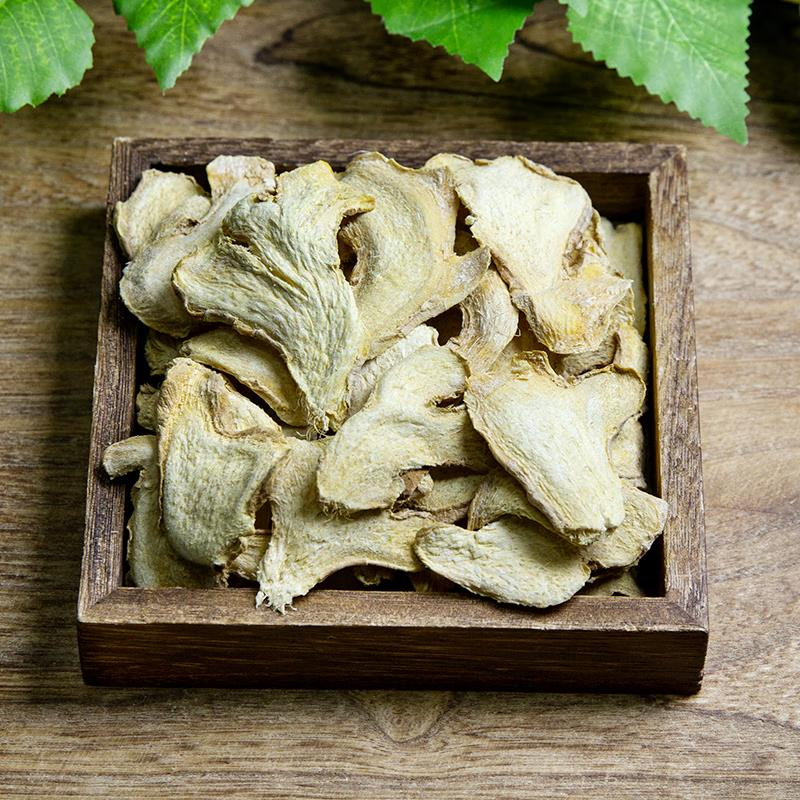
Gan Jiang
干姜 Gan Jiang
Zingiberis Rhizoma
💊 Actions
Warms the Stomach and Lungs, stops cold vomiting and cold damp cough.
Contraindications
Contraindicated for those with heat constitution and active bleeding.
📖 Usage & Dosage
3-9 grams.
📖 In-Depth Guide
What Is Gan Jiang (Dried Ginger)?
Gan Jiang, listed in Chinese pharmacopeia as Zingiberis Rhizoma, is the dried rhizome of the ginger plant Zingiber officinale. Fresh ginger is a familiar kitchen spice, but Gan Jiang is the mature rhizome that has been sliced and thoroughly dried, which gives it a firmer, more compact texture and a distinctly hotter, more persistent character. It appears as flattened, branching slices with a pale, fibrous interior and a sharp, spicy aroma. In English it is usually called dried ginger rhizome. It should not be confused with fresh ginger, known as Sheng Jiang, which is a separate medicinal material with its own uses and a gentler nature.
TCM Properties and Actions
Gan Jiang is hot in nature and acrid (pungent) in flavor, and it enters the Spleen, Stomach, Kidney, Heart, and Lung channels. Its recorded actions are to warm the Stomach and Lungs and to stop cold-type vomiting and cold-damp cough.
Within the traditional framework, its hot, acrid character is used to warm the middle burner, the functional area of the Spleen and Stomach, when internal cold produces abdominal coldness and pain, poor appetite, watery or clear vomiting, and loose stools. The same warming action supports the Lung when cold-phlegm or cold-dampness collects there, producing thin, white sputum, a persistent productive cough, and a feeling of coldness in the chest or back. Textbook materia medica also describes it as warming the channels and supporting yang when internal cold is unusually deep, which is why it appears in classical formulas for patterns of profound cold with cold limbs and a faint pulse. These are traditional pattern descriptions rather than diagnoses of specific diseases.
Traditional Use and Common Combinations
Gan Jiang is almost always used within balanced formulas rather than on its own. For Spleen and Stomach deficiency-cold with abdominal pain, vomiting, and loose stools, it is traditionally combined with ginseng, white atractylodes, and licorice in a classic middle-warming formula. For devastated yang with extremely cold limbs and a faint pulse, it is paired with prepared aconite, called Fu Zi, in a well-known emergency formula; the aconite is always used in processed form and decocted properly. For cough caused by cold fluids in the Lung, it may appear with warming and constraining herbs such as asarum and schisandra. Practitioners distinguish these traditional uses from any modern digestive or respiratory diagnosis, and the surrounding formula is adjusted to each individual.
Safety, Contraindications, and Interactions
Gan Jiang is explicitly contraindicated for people with a heat constitution and during active bleeding. In practice this means avoiding it when signs of internal heat are present, such as recurrent mouth ulcers, a red tongue with a yellow coating, a persistent sensation of heat, a dry throat, or a strong desire for cold drinks, and not using it while any bleeding is occurring, including heavy menstrual bleeding or bleeding judged to be associated with heat. Because the herb is distinctly hot, pregnant or breastfeeding women and people with significant chronic illness should use it only after consultation with a qualified practitioner. Anyone taking regular medication should tell their clinician about all herbs being used. Stop use if heat-like discomfort, mouth sores, or unusual bleeding develops.
How TCM Practitioners Use It Today
The standard dosage is 3-9 grams, most often prepared as a decoction in which the dried slices are simmered together with the other ingredients of the prescribed formula. Stir-fried forms are sometimes chosen when a more consolidated warming effect on the channels is wanted. A practitioner selects the dose and processing style after assessing the overall pattern and the rest of the formula, and culinary dried ginger is not considered a substitute for a properly prescribed preparation.
This content is for educational purposes only and does not substitute for medical advice, diagnosis, or treatment from a licensed clinician.
Frequently asked questions
Is Gan Jiang safe during pregnancy? Because of its hot, acrid character, Gan Jiang should not be used during pregnancy or breastfeeding on one's own. If a qualified practitioner who is fully informed about the pregnancy judges it appropriate within a balanced formula, their specific guidance should be followed, and all clinicians should be told what is being taken.
Can Gan Jiang replace prescription medication? No. Gan Jiang is a traditional herb used within individualized TCM formulas and cannot replace prescribed drugs for digestive, respiratory, bleeding, or any other conditions. Do not stop or change medication without speaking with the prescribing clinician.
What is the difference between Gan Jiang and Sheng Jiang? Both come from Zingiber officinale, but they are treated as separate herbs. Sheng Jiang, or fresh ginger, is warm but gentler; it is used to release the exterior at the onset of a wind-cold illness, warm the Stomach, calm nausea, and moderate the harshness of certain other herbs. Gan Jiang, the dried rhizome, is hotter and more persistent; it focuses on warming the middle burner, dispersing deep internal cold, and warming the Lungs in cold-phlegm cough.
🏠 Dried Ginger
Sharper and hotter than fresh ginger; an example of thermal transformation through drying.
💊 Formulas with this herb
🧭 Explore more
🌿 Related Herbs
Related conditions
Medical disclaimer: this content is for health education only and does not constitute diagnosis or treatment advice. Consult a qualified healthcare practitioner before use; some herbs may interact with medications and require special caution during pregnancy or breastfeeding.