Note: the actions, contraindications and usage sections are currently published in Arabic (primary market content); translations are in progress. Herb name, nature, taste and meridians are shown as is.
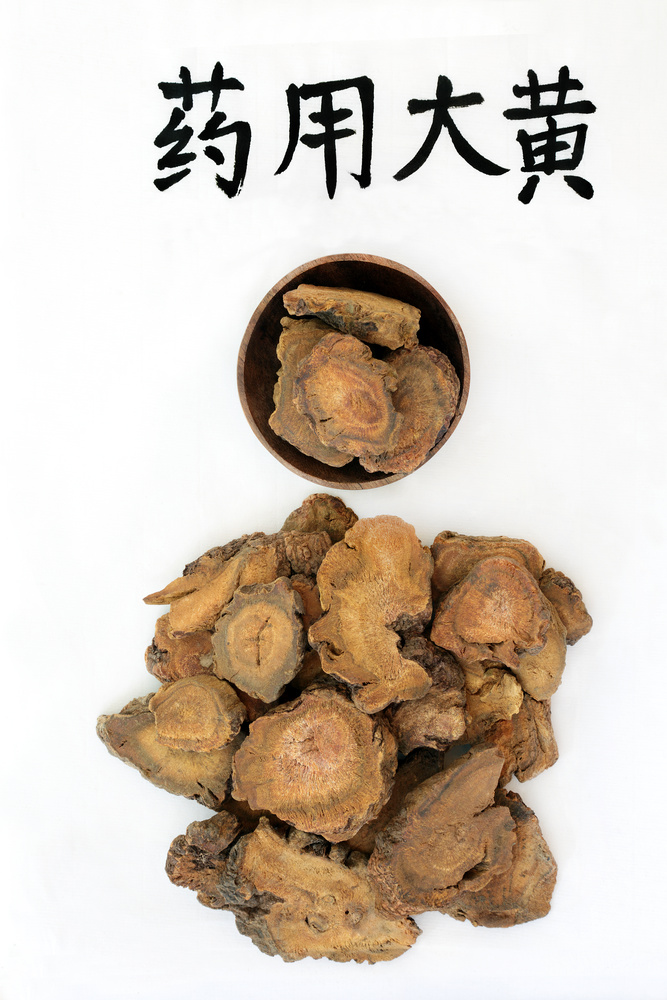
Da Huang
大黄 Da Huang
Rhei Radix et Rhizoma
💊 Actions
Strongly purges the intestines to treat severe constipation, cools the blood, and dispels blood stasis. The strongest purgative in Chinese medicine.
Contraindications
Contraindicated in pregnant and nursing women and in those with weak constitution; do not use for prolonged periods.
📖 Usage & Dosage
3-15 g, briefly decocted (prolonged decoction weakens its purgative action).
📖 In-Depth Guide
What Is Da Huang?
Da Huang, known pharmaceutically as Rhei Radix et Rhizoma, is the dried root and rhizoma of Rheum palmatum and related Chinese rhubarb species. The roots are dug up in late autumn, trimmed, peeled, cut into pieces, and dried; they show a characteristic yellow-brown grain. English sources call it Chinese rhubarb or medicinal rhubarb to distinguish it from the edible garden rhubarb. It is used raw or in various processed forms that alter its strength. It is described as the strongest purgative in Chinese medicine.
TCM Properties and Actions
Da Huang is bitter in flavor and very cold in nature, and it enters the spleen, stomach, large intestine, liver, and heart channels. Its actions are to strongly purge the intestines to address severe constipation, cool the blood, and dispel blood stasis.
The purgative action targets the traditional pattern of excess heat in the intestines, where hard, dry stools accompany feverishness, abdominal fullness, a red tongue with yellow coating, and thirst. Rather than a routine laxative, it is understood as a sharp tool for intense, confirmed heat-excess constipation. Cooling the blood applies to heat patterns manifesting as bloodshot eyes, mouth sores, or bleeding that the framework attributes to chaotic hot blood. Dispelling blood stasis describes its traditional use in formulas for fixed stabbing pain, menstrual blockage from stasis, and traumatic injury, always according to pattern.
Traditional Use and Common Combinations
For intense heat-excess constipation, Da Huang is paired with Mang Xiao (Natrii Sulfas) and Zhi Shi in the classic formula Da Cheng Qi Tang, reserved for severe presentations. For milder heat accumulation with mouth ulcers and irritability, smaller amounts are combined with Huang Lian and Huang Qin. For blood stasis patterns, it appears with Tao Ren and other stasis-moving herbs in classical women's-health formulas, and trauma formulas likewise use it to move static blood. These are traditional applications; severe or persistent abdominal pain, vomiting, blood in the stool, or constipation with fever requires urgent medical assessment rather than self-purgation.
Safety, Contraindications, and Interactions
Da Huang is contraindicated in pregnant and nursing women and in those with a weak constitution, and it must not be used for prolonged periods. Its strong cold nature makes it unsuitable for constipation of the cold-deficiency type, loose stools, or depleted qi and blood. Prolonged or frequent use can lead to dependency on purging, loss of fluids and electrolytes, abdominal cramping, and disturbance of the bowel, and it may darken the urine harmlessly through its pigments. Anyone taking diuretics, heart medication, anticoagulants, or other regular drugs should consult a clinician because strong purging can alter fluid balance and the absorption of medicines. Keep it away from children.
How TCM Practitioners Use It Today
The typical usage is: 3-15 g, briefly decocted (prolonged decoction weakens its purgative action). Practitioners therefore add Da Huang late into the cooking time when a purgative effect is intended, while longer cooking or processed forms are chosen when blood-cooling or stasis-dispelling effects are emphasized. Granules and pills are also prescribed. Dosing is individualized and short, and unexplained constipation or abdominal symptoms require medical evaluation.
This article is educational and does not replace diagnosis or treatment by a licensed healthcare professional.
Frequently asked questions
Is Da Huang safe during pregnancy? No. Da Huang is contraindicated in pregnancy because its strong purgative action may stimulate the abdomen, and it is also contraindicated while nursing. Pregnant women with constipation should seek advice from an obstetric clinician rather than using this herb.
Can Da Huang replace prescription medication? No. It is a strong traditional purgative for a specific heat-excess pattern, not a substitute for prescribed laxatives or treatment of bowel disease. Persistent constipation, bleeding, weight loss, or severe pain needs medical investigation.
What is the difference between raw and processed Da Huang? Raw Da Huang is the strongest, coldest form and is used briefly decocted for severe heat-excess constipation. Processed forms, such as wine-fried or steamed Da Huang, are gentler and are chosen for cooling blood, clearing upper-body heat, or dispersing blood stasis when a violent purge is undesirable. Charred Da Huang is used in some bleeding patterns.
🏠 Medicinal Rhubarb
Rhubarb is well known in ancient Arab medicine; the Chinese variety is more potent.
💊 Formulas with this herb
🧭 Explore more
🌿 Related Herbs
Related conditions
Medical disclaimer: this content is for health education only and does not constitute diagnosis or treatment advice. Consult a qualified healthcare practitioner before use; some herbs may interact with medications and require special caution during pregnancy or breastfeeding.