Note: the actions, contraindications and usage sections are currently published in Arabic (primary market content); translations are in progress. Herb name, nature, taste and meridians are shown as is.
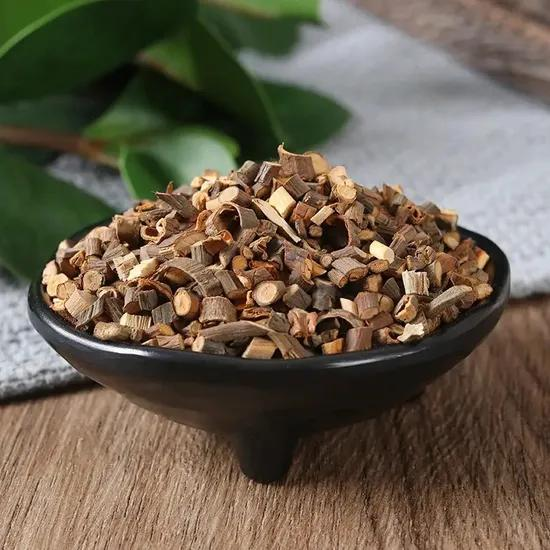
Gui Zhi
桂枝 Gui Zhi
Cinnamomi Ramulus
💊 Actions
Releases the exterior and resolves the muscles; for early stages of cold, stiff neck, and poor circulation in the limbs.
Contraindications
Contraindicated in active bleeding and used with caution in pregnancy; do not use in high fever.
📖 Usage & Dosage
3-9 grams.
📖 In-Depth Guide
What Is Gui Zhi (Cinnamon Twig)?
Gui Zhi, listed as Cinnamomi Ramulus, is the dried young twig of the cassia cinnamon tree, Cinnamomum cassia. The slender twigs are collected in spring and summer, cut into short segments, and dried; they show reddish-brown bark, a fragrant aroma, and a sweet, spicy taste. In English it is commonly called cinnamon twig. Although it comes from the same tree as the thick bark sold as spice and as the separate herb Rou Gui, or cinnamon bark, the two materials are not interchangeable: the thin young twigs are considered gentler and more outward-moving, while the mature bark is hotter and directed deeper into the body.
TCM Properties and Actions
Gui Zhi is warm in nature, with acrid (pungent) and sweet flavors, and it enters the Heart, Lung, and Bladder channels. Its stated action is to release the exterior and resolve the muscles, and it is traditionally used for the early stages of a cold-type illness, a stiff neck and upper back, and poor circulation in the limbs.
In traditional theory, the warm, acrid character reaches the body surface and encourages mild sweating, helping to disperse an invading wind-cold influence when a person feels chilly, with headache, tense neck and shoulder muscles, and either slight sweating or an inability to sweat comfortably. Because it also enters the Heart and supports the movement of yang through the vessels, Gui Zhi is used for cold hands and feet and a feeling of cold or numbness in the limbs when poor circulation is judged to arise from cold obstructing the channels. Textbook practice also associates it with warming and unblocking the chest and supporting the movement and transformation of fluids, although these uses always take place within carefully composed formulas.
Traditional Use and Common Combinations
For a wind-cold pattern with slight sweating and a tense upper body, Gui Zhi is classically paired with white peony root, a combination that releases the exterior while protecting the body's fluids. For a tighter cold pattern without sweating, it may be combined with Ma Huang, or ephedra, which strengthens the surface-releasing effect and requires close supervision. For fluid accumulation with difficult urination, it is paired with poria fungus and water-draining herbs. For chest tightness from obstructed yang, it appears alongside herbs that move chest qi. These are traditional pattern-based applications; the same symptoms can have other causes, and self-selected herbs should not replace a modern evaluation when symptoms are persistent or severe.
Safety, Contraindications, and Interactions
Gui Zhi is contraindicated in active bleeding. It is used with caution in pregnancy, and it must not be used in high fever. In practical terms, a pregnant woman should take it only when a qualified practitioner specifically prescribes it, and anyone currently bleeding, including heavy or unusual menstrual bleeding or a known bleeding tendency, should avoid it. Its warm, outward-moving nature also makes it unsuitable when the presentation is dominated by heat rather than cold. People taking regular medication, especially anticoagulants or other drugs that affect bleeding, should consult their clinician before using it. Use should stop if unusual bruising or bleeding, palpitations, or marked heat-like symptoms occur.
How TCM Practitioners Use It Today
The standard dosage is 3-9 grams per day, used in decoction or in processed granule and pill forms as part of an individualized formula. The practitioner decides the dose according to whether Gui Zhi is leading the formula or supporting other herbs, and matches the combination to the person's pattern rather than to a single symptom. Cinnamon twig from a spice supplier is not considered equivalent to properly sourced medicinal material.
This content is for educational purposes only and does not substitute for medical advice, diagnosis, or treatment from a licensed clinician.
Frequently asked questions
Is Gui Zhi safe during pregnancy? Gui Zhi is used with caution in pregnancy, so pregnant women should not take it on their own. Use it only if a qualified practitioner who knows about the pregnancy specifically prescribes it within a balanced formula, and inform every clinician involved in your care.
Can Gui Zhi replace prescription medication? No. Gui Zhi is a traditional herb used within individualized TCM formulas and cannot replace prescribed drugs for infections, circulatory problems, or any other condition. Do not stop or change medication without speaking with the prescribing clinician.
What is the difference between Gui Zhi and Rou Gui? Both come from Cinnamomum cassia, but the part used changes the role. Gui Zhi is the thin young twig: lighter and gentler, it releases the exterior for early wind-cold illness, reaches the limbs and vessels, and supports the movement of yang and fluids. Rou Gui is the thick mature bark: much hotter and sweeter, it warms deep Kidney yang and the gate of vitality, and is used for profound internal cold, often added late to a decoction. Gui Zhi moves outward; Rou Gui warms inward and downward.
🏠 Cinnamon Twig
It is the core herb of one of China's most famous formulas, Gui Zhi Tang.
💊 Formulas with this herb
🧭 Explore more
🌿 Related Herbs
Related conditions
Medical disclaimer: this content is for health education only and does not constitute diagnosis or treatment advice. Consult a qualified healthcare practitioner before use; some herbs may interact with medications and require special caution during pregnancy or breastfeeding.