Note: the actions, contraindications and usage sections are currently published in Arabic (primary market content); translations are in progress. Herb name, nature, taste and meridians are shown as is.
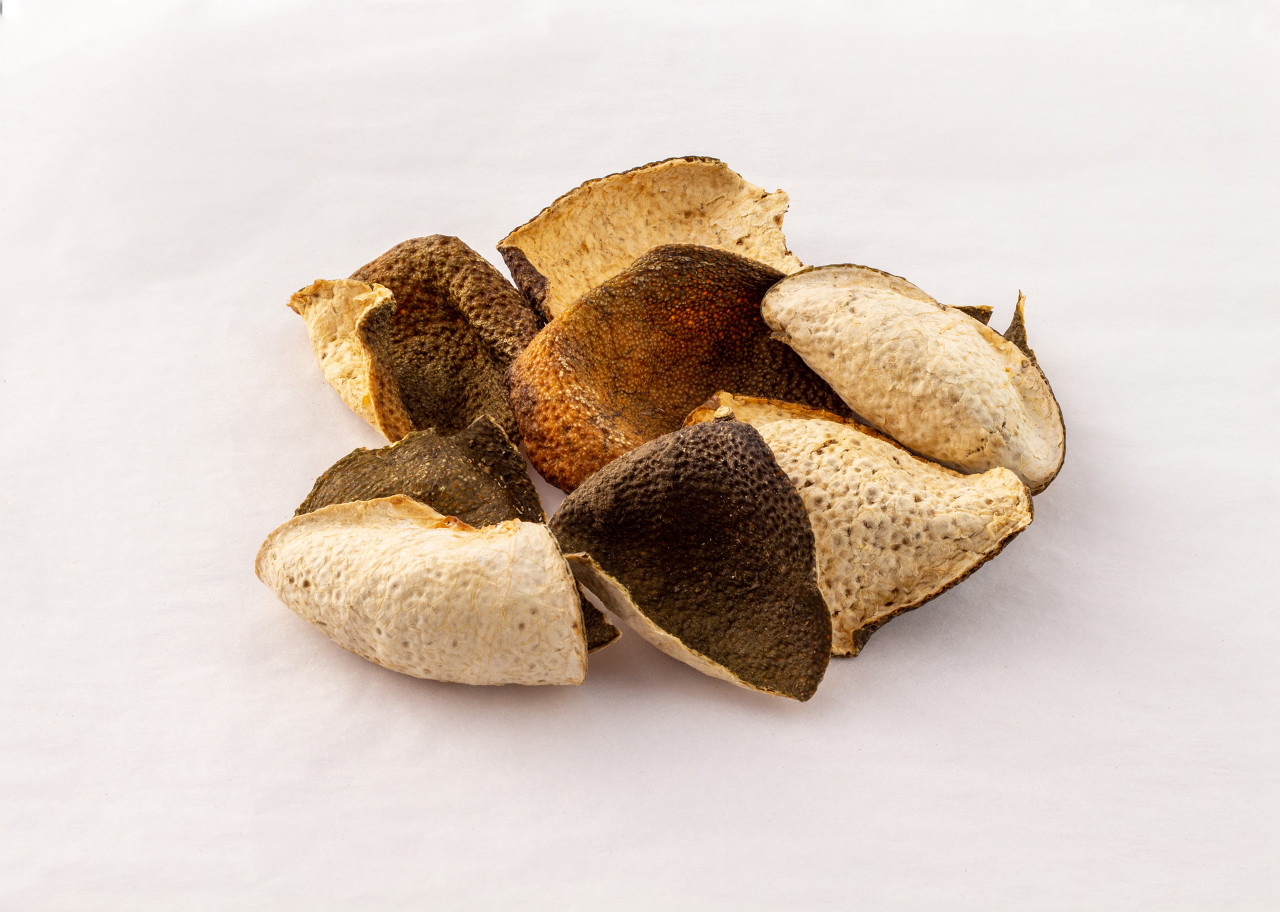
Chen Pi
陈皮 Chen Pi
Citri Reticulatae Pericarpium
💊 Actions
Regulates qi and harmonizes the stomach, resolves phlegm. For abdominal distension, nausea, and cough with white phlegm.
Contraindications
Contraindicated for those with yin deficiency and dry cough.
📖 Usage & Dosage
3-9 grams, infused as tea or decocted.
📖 In-Depth Guide
What Is Chen Pi (Aged Tangerine Peel)?
Chen Pi (pinyin: chen pi), whose pharmaceutical name is Citri Reticulatae Pericarpium, is the dried, aged peel of the tangerine, a small citrus fruit closely related to the mandarin orange. In English it is most often called aged tangerine peel or aged citrus peel. The word chen means aged, and in the Chinese tradition peel that has been stored and allowed to mellow for several years is considered more valuable than freshly dried peel, which is regarded as sharper and more drying.
The commercial herb consists of thin, irregular pieces of dried peel with a fragrant citrus aroma and a pungent, slightly bitter taste. It is one of the best-known examples of a Chinese food-medicine: it is simmered in soups and rice porridges, steeped as a simple tea, and used as a culinary spice as well as a medicinal ingredient. Because citrus peels are familiar in many cooking traditions, Chen Pi is usually one of the easiest Chinese herbs for international readers to recognize and use.
TCM Properties and Actions
In traditional Chinese medicine (TCM) theory, every herb is described by a temperature nature, a flavor, and the meridians, or organ channels, it is said to enter. Chen Pi is classified as warm in nature and acrid (pungent) and bitter in flavor, and it enters the Spleen and Lung meridians.
Its recorded actions are to regulate qi and harmonize the middle jiao, the digestive center of the body, and to resolve phlegm. Regulating qi in this context means supporting the smooth movement of the body's driving energy when it is felt to be stuck or sluggish in the digestive region. Harmonizing the stomach describes its traditional role when the stomach feels heavy, bloated, or rebellious, with signs such as nausea. Its phlegm-resolving action is directed at what TCM calls damp-phlegm, the kind associated with a heavy, sluggish digestion and copious white, watery sputum, rather than thick, yellow, heated phlegm.
Traditional Use and Common Combinations
Traditionally, Chen Pi is used for patterns marked by abdominal distension, a stuffy or full feeling after eating, belching, and nausea, all understood in TCM as qi stagnation in the Spleen and Stomach accompanied by dampness. Its warmth and aroma are believed to move stagnation and help the digestive system transform fluids. It is also a classic ingredient in formulas for cough with white phlegm, where its bitterness is said to descend rebellious Lung qi and its drying nature is used to address damp-phlegm.
Chen Pi appears in many textbook formulas, usually in a supporting role rather than alone. In the kitchen it is paired with rich or greasy foods, which tradition holds it helps digest. These are traditional pattern-based uses: phlegm in TCM is a broader concept than sputum in modern medicine, and persistent digestive fullness or cough should be assessed by a clinician rather than self-diagnosed.
Safety, Contraindications, and Interactions
Chen Pi is traditionally considered a relatively mild, food-grade herb, but it is not appropriate for every constitution. It is warm and drying, and the source record states specifically that it is contraindicated for those with yin deficiency and dry cough. In TCM terms this describes a pattern of depleted moistening fluids, with signs such as a dry throat, a dry tickling cough with little or no sputum, and a tongue that is red and lacks coating. Using a warm, drying herb in that setting is believed to worsen the dryness.
A heat-type cough with thick yellow sputum and heat signs likewise calls for professional guidance rather than self-medication. Allergy to citrus peel is a further reason to avoid it. Pregnant or breastfeeding women, children, older adults, and people taking regular medication should consult a qualified practitioner before using it medicinally rather than as an occasional food flavoring.
How TCM Practitioners Use It Today
The source usage for Chen Pi is 3-9 grams, infused as tea or decocted. A practitioner chooses the actual amount within that range according to the individual's pattern and the other ingredients in a formula; the amount should not be increased beyond professional advice. In decoctions it is simmered together with other herbs, while in everyday use small pieces are steeped in hot water as tea or added to soups and rice porridge.
This guide is educational and does not replace diagnosis or care from a qualified healthcare professional. Persistent cough, unexplained weight loss, chest symptoms, or ongoing digestive problems warrant medical evaluation rather than herbal self-management.
Frequently asked questions
Is Chen Pi safe during pregnancy? Chen Pi is commonly encountered as a food ingredient, but the source record gives no specific guidance for medicinal use during pregnancy. Pregnant women should keep to ordinary culinary amounts or ask a qualified practitioner, and should not take concentrated teas or formulas containing it on their own initiative.
Can Chen Pi replace prescription medication? No. Chen Pi is a traditional herb used within the framework of Chinese medicine; it is not a substitute for prescribed medicines for digestive, respiratory, or any other condition. If you take medication, discuss any herbal use with your practitioner or pharmacist, because interactions can occur.
What is the difference between Chen Pi and Qing Pi? Both come from tangerine peel, but they are different medicines. Chen Pi is the aged peel of the ripe fruit; it regulates digestive qi, resolves phlegm, and is gentle enough for food use. Qing Pi is the dried peel of the young, unripe fruit; it is more forceful and breaking, aimed at pronounced qi stagnation and pain rather than everyday digestion.
🏠 Aged Tangerine Peel
Tangerine peel aged for years is treasured as a gem; it is easily accepted by Arabs since they are already familiar with citrus peels.
💊 Formulas with this herb
🧭 Explore more
🌿 Related Herbs
Related conditions
Medical disclaimer: this content is for health education only and does not constitute diagnosis or treatment advice. Consult a qualified healthcare practitioner before use; some herbs may interact with medications and require special caution during pregnancy or breastfeeding.