Note: the actions, contraindications and usage sections are currently published in Arabic (primary market content); translations are in progress. Herb name, nature, taste and meridians are shown as is.
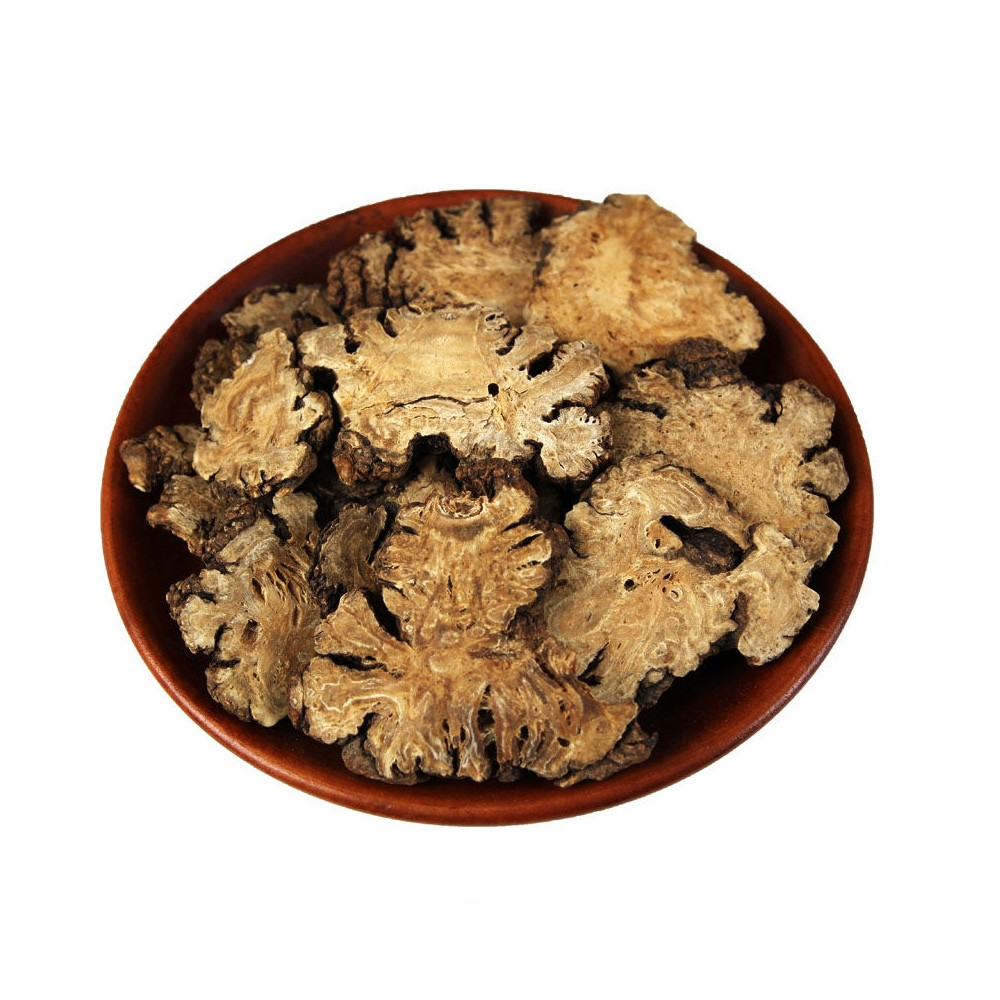
Chuan Xiong
川芎 Chuan Xiong
Chuanxiong Rhizoma
💊 Actions
Activates Blood and moves Qi, dispels Wind and relieves pain. The most important herb for migraine and menstrual pain.
Contraindications
Contraindicated for patients with active bleeding and excessive Heat. Contraindicated during pregnancy. Do not use with anticoagulant drugs.
📖 Usage & Dosage
Decoct 3-9 grams. Do not use alone for a long time (it raises Yang and promotes Heat).
📖 In-Depth Guide
What Is Chuan Xiong (Sichuan Lovage Rhizome)?
Chuan Xiong is the dried rhizome of Ligusticum chuanxiong, recorded in pharmaceutical Latin as Chuanxiong Rhizoma. In English it is called Sichuan lovage rhizome or simply chuanxiong. The dried pieces are irregular, yellow-brown, knotty rhizome slices with a strong, penetrating aromatic smell and a bitter, slightly numbing taste.
The name reflects its traditional association with the Sichuan region of China, where it has long been cultivated. The rhizome is harvested in summer, cleaned, baked or sun-dried, and sliced, and it may also be wine-fried when a stronger blood-moving effect is wanted. In Chinese medicine Chuan Xiong is regarded as a qi-moving herb within the blood and is one of the principal pain-relieving substances.
TCM Properties and Actions
Chuan Xiong is warm in nature and acrid in flavor, entering the Liver, Gallbladder, and Pericardium channels. Its strong, moving aroma is understood in Chinese medicine to drive stagnation and lift and disperse rather than to supplement.
Its recorded actions are to activate blood and move qi, dispel wind and relieve pain. It is described as the most important herb for migraine and menstrual pain. The blood-activating and qi-moving actions address fixed or stabbing pain and menstrual pain understood as blood and qi stagnation, including post-partum discomfort and pain in the ribs and chest. Its wind-dispelling action is directed at headaches, particularly the recurring, wind-related headache patterns of Chinese medicine, and at wind-damp discomfort in the body. Because it is strongly moving and upward-lifting, it is also used for dizziness linked to stagnation when the pattern fits.
Traditional Use and Common Combinations
Chuan Xiong appears in many classical formulas for headache and menstrual pain. It is combined with wind-dispelling herbs for head colds and migraine, with blood-nourishing herbs such as Dang Gui and prepared rehmannia so that movement does not damage the blood, and with qi-moving herbs for chest and flank discomfort from stagnation. The wine-fried form is often chosen when activating blood and relieving pain is the priority.
In the traditional framework, headaches are differentiated by location and pattern, which is why Chuan Xiong is frequently described as a leading headache herb rather than a universal painkiller. New, severe, or sudden headaches, neurological symptoms, and heavy or abnormal menstrual bleeding require urgent medical evaluation.
Safety, Contraindications, and Interactions
Chuan Xiong is contraindicated for patients with active bleeding and excessive heat. It is contraindicated during pregnancy. Do not use it with anticoagulant drugs. Active bleeding includes heavy menstrual bleeding, nosebleeds, blood in urine or stool, bleeding ulcers, and the period around surgery, because the blood-activating action can increase bleeding risk. Excess-heat presentations, such as a red face, thirst, fever, and a red tongue, are also unsuitable because the herb is warm and ascending.
People taking anticoagulant or antiplatelet medication must use it only under professional supervision, and anyone who develops unusual bruising or bleeding should stop and seek advice. It is also not suitable as a long-term standalone tonic.
How TCM Practitioners Use It Today
The source usage is: Decoct 3-9 grams. Do not use alone for a long time (it raises Yang and promotes Heat). Practitioners therefore use it within balanced formulas, often alongside blood-nourishing herbs, for limited courses, and they select plain or wine-fried slices according to the pattern and bleeding risk. This information is educational and does not replace care from a qualified practitioner or physician.
Frequently asked questions
Is Chuan Xiong safe during pregnancy?
No. Chuan Xiong is contraindicated during pregnancy because of its strong blood-activating and qi-moving action. Headache or menstrual concerns during pregnancy should be discussed with an obstetric professional.
Can Chuan Xiong replace prescription medication?
No. Chuanxiong is a traditional moving and pain-relieving herb. It cannot replace anticoagulants, migraine medication, or hormone treatment, and it must not be combined with anticoagulant drugs without medical supervision.
What is the difference between Chuan Xiong and Yan Hu Suo?
Both move qi and blood and relieve pain, but Chuan Xiong is strongly aromatic and ascending, with a particular traditional role in headaches and wind-related pain. Yan Hu Suo focuses more on pain in the chest, abdomen, and menstruation and is commonly processed with vinegar to strengthen its pain-relieving action.
🏠 Chuanxiong
Chuanxiong is a purely Chinese herb, but its use resembles that of certain Arab analgesic herbs for headaches, such as rosemary.
💊 Formulas with this herb
🧭 Explore more
🌿 Related Herbs
Related conditions
Medical disclaimer: this content is for health education only and does not constitute diagnosis or treatment advice. Consult a qualified healthcare practitioner before use; some herbs may interact with medications and require special caution during pregnancy or breastfeeding.