Recommended Cupping Days in the Prophetic Tradition
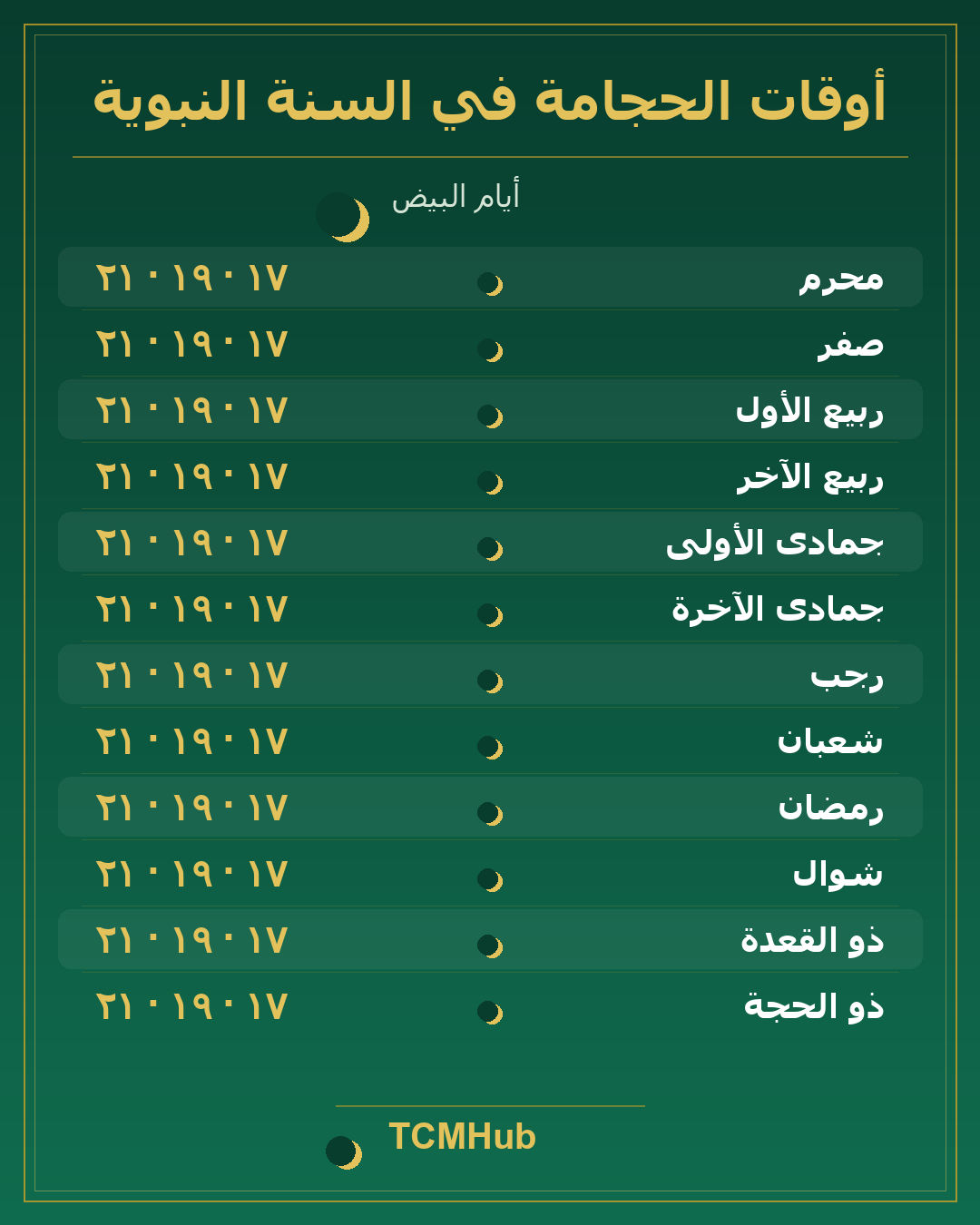
The recommended days for cupping (hijama) in the Prophetic tradition are the 17th, 19th and 21st of every lunar Hijri month—Anas ibn Malik narrated that the Prophet ﷺ was cupped on these dates. Several noble hadith encourage cupping on these mid-month days, traditionally believed to bring greater benefit and less discomfort. Note: in the Sunnah, the "White Days" (al-ayyām al-bīḍ) properly denote the 13th, 14th and 15th, the moonlit nights; the 17th/19th/21st are the cupping dates attributed to the Prophet. Both fall near mid-month and have long been conflated in folk practice. It is also traditionally recommended to avoid Saturday; for preventive cupping, Monday and Thursday are considered the best days.
Cupping Days Throughout the Hijri Year
| Hijri month | Recommended cupping days (17th, 19th, 21st) | Notes |
|---|---|---|
| Muharram | 17th, 19th, 21st of Muharram | Beginning of the Hijri year, a blessed time for cupping |
| Safar | 17th, 19th, 21st of Safar | — |
| Rabi' al-Awwal | 17th, 19th, 21st of Rabi' al-Awwal | Month of the birth of the Prophet ﷺ |
| Rabi' al-Thani | 17th, 19th, 21st of Rabi' al-Thani | — |
| Jumada al-Ula | 17th, 19th, 21st of Jumada al-Ula | — |
| Jumada al-Akhirah | 17th, 19th, 21st of Jumada al-Akhirah | — |
| Rajab | 17th, 19th, 21st of Rajab | An odd-numbered sacred (forbidden) month |
| Sha'ban | 17th, 19th, 21st of Sha'ban | Preparation for Ramadan |
| Ramadan | 17th, 19th, 21st of Ramadan | Cupping does not break the fast, but after iftar is preferred |
| Shawwal | 17th, 19th, 21st of Shawwal | — |
| Dhu al-Qi'dah | 17th, 19th, 21st of Dhu al-Qi'dah | — |
| Dhu al-Hijjah | 17th, 19th, 21st of Dhu al-Hijjah | Month of Hajj |
Why These Days?
Evidence from the Prophetic Tradition
Several hadith in the noble Prophetic tradition encourage cupping in general:
- The Messenger of Allah ﷺ said: "The best of what you use to treat yourselves is cupping." (reported by Bukhari and Muslim)
- Ibn Umar (may Allah be pleased with both of them) narrated that the Prophet ﷺ said: "Cupping on an empty stomach is a remedy, and on a full stomach a malady." (reported by Tirmidhi)
- Anas ibn Malik (may Allah be pleased with him) narrated that the Prophet ﷺ underwent cupping on the 17th, 19th and 21st.
The Prophetic cupping dates and the White Days
Per the narration of Anas ibn Malik, the Prophet ﷺ was cupped on the 17th, 19th and 21st of each month, and these remain the most popular cupping dates in folk practice. The "White Days" (al-ayyām al-bīḍ), strictly speaking, are the 13th, 14th and 15th of each Hijri month, when the moon is full and bright; both sets of dates cluster near the full moon and have long been conflated. Scholars and traditional physicians regard these mid-month days as ideal for cupping based on:
- 1Tides: It is traditionally believed that the moon's gravitational pull on the body's fluids peaks on these days, making the drawing of "stale blood" more effective.
- 2Accumulated experience: Over centuries of practice, cupping practitioners observed better results on these days.
- 3Convergence of Prophetic and traditional medicine: Both in the Islamic heritage and in traditional Chinese medicine, there is a shared idea of "suitable times" for treatment.
The Traditional Chinese Medicine Perspective
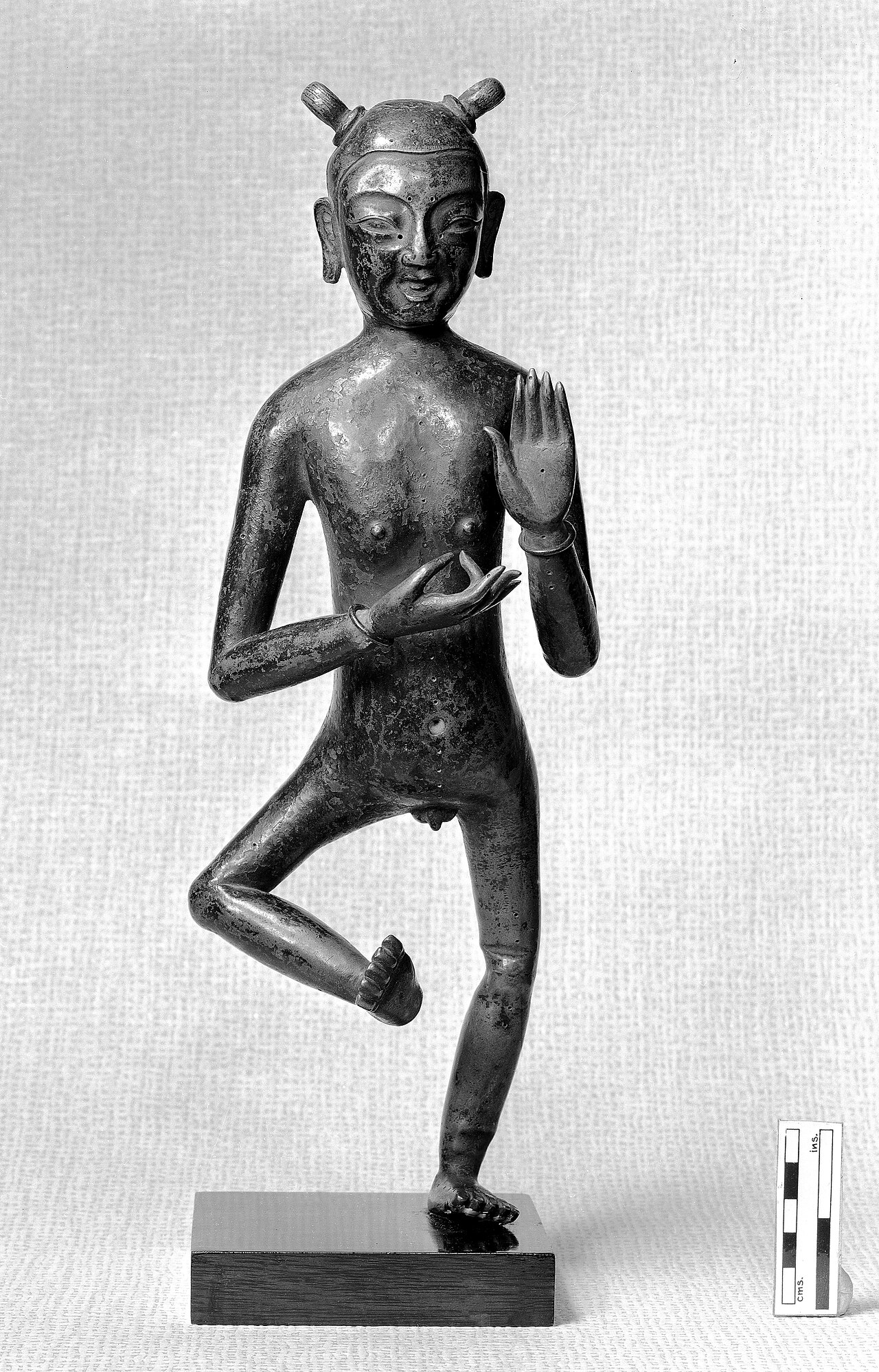
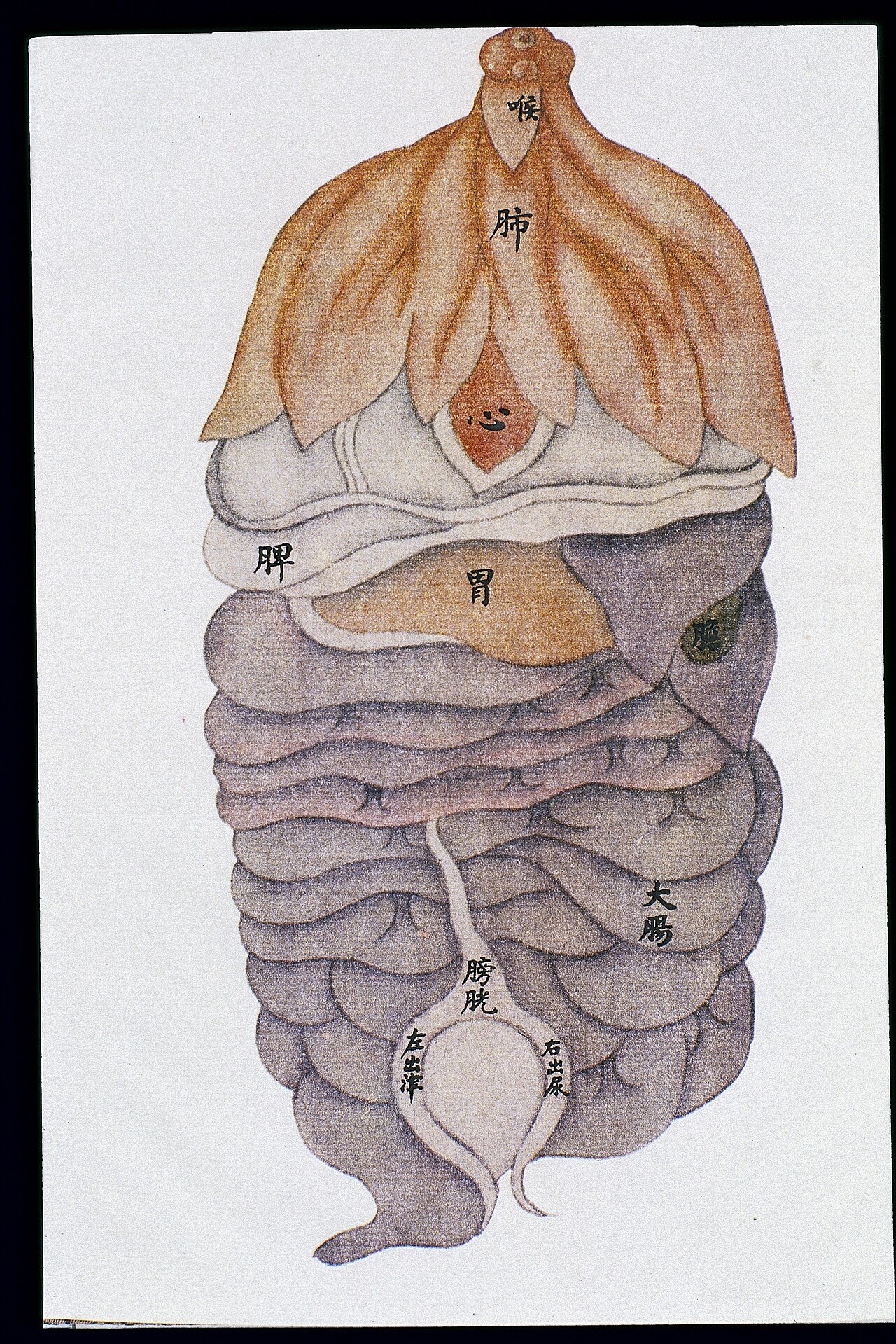
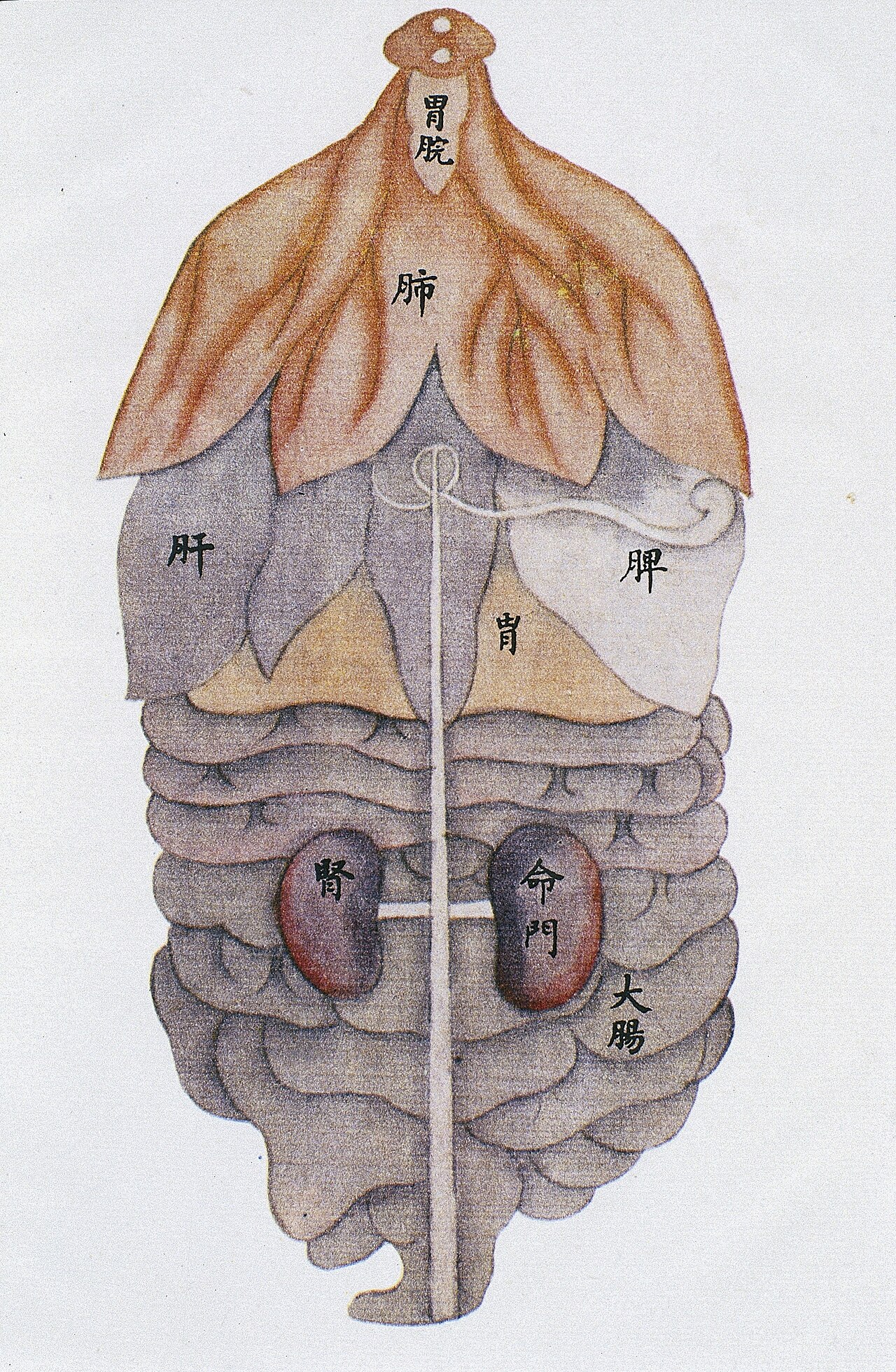
In traditional Chinese medicine, cupping is known as "拔罐" (báguàn). The choice of timing is linked to the concept of the flow of "qi" (vital energy, 气) through the body's meridians. Just as Prophetic medicine designated certain days, Chinese medicine identifies seasons and times of day when cupping is more beneficial — this intersection of the two systems reflects a cross-cultural wisdom about the human body.
Who Should Not Undergo Cupping?
| Condition | Reason |
|---|---|
| During menstruation (women) | The body is in a state of natural bleeding |
| During pregnancy | Risk to the fetus |
| Severe anemia | Cupping draws additional blood |
| Uncontrolled hypertension | May cause complications |
| Skin disease at the cupping site | Infection may spread |
| Uncontrolled diabetes | Slow wound healing |
| Elderly over 70 (without consultation) | Thinner skin and slower recovery |
Best Times of Day
It is traditionally recommended to perform cupping:
- After the Fajr prayer or before Dhuhr: the body is at its peak of activity
- On an empty stomach: as stated in the noble hadith
- Avoid cupping immediately after eating: blood is directed toward the stomach for digestion
After-Cupping Tips
- 1Do not shower for 4–6 hours
- 2Avoid strenuous physical exertion for a full day
- 3Drink plenty of warm water
- 4Eat light, easily digestible food
- 5Do not expose yourself directly to a cold draft
Frequently Asked Questions
Does cupping break the fast during Ramadan?
The majority of scholars hold that cupping does not invalidate the fasting person's fast, but it is preferable to postpone it until after iftar to avoid weakness. It is narrated that the Prophet ﷺ underwent cupping while fasting.
How many times a year is cupping recommended?
There is no fixed number per year. Some practitioners advise 4–6 sessions annually for prevention; it is best to consult a qualified cupping practitioner who can assess your individual condition.
Does cupping hurt?
Most people describe the sensation as a "gentle pull," similar to the skin being suctioned. Dry cupping (without incisions) is less painful than wet cupping. Pain varies by area and by person.
What is the difference between dry and wet cupping?
Dry cupping uses suction only without breaking the skin and suits beginners. Wet cupping involves a superficial incision and the drawing of a small amount of blood; it is the type most common in Prophetic medicine.
Can a woman undergo cupping during her period?
It is not advised. During menstruation the body is in a state of natural blood loss, and cupping may increase weakness. It is best to wait until at least three days after the period has ended.
What are the best cupping days for men and women?
According to the Prophetic tradition and the lunar calendar, cupping is recommended on the 17th, 19th and 21st of every Hijri month (the dates on which the Prophet ﷺ was cupped, popularly called the "White Days"; strictly, the White Days are the 13th–15th); many prefer Monday or Thursday morning, with a stomach that is not full.
- For men: the 17th and 19th are preferred; Friday is generally avoided, except after Asr according to some practitioners.
- For women: the same days (17th, 19th, 21st) are recommended, provided the woman is not menstruating, in postpartum bleeding, or pregnant; it is preferable to wait until at least three days after menstruation has ended.
These timings are based on heritage and Prophetic medicine and are not fixed medical rules; benefit is not restricted to one particular day, and what matters most is the body's condition and the assessment of a certified practitioner. Avoid cupping in states of extreme exhaustion, extreme hunger, or immediately after a meal.
🔗 Read also: The complete cupping-days calendar, Dry vs. wet cupping, and the Cupping therapy page.
Is cupping lawful (halal) or forbidden (haram)?
Cupping is recommended (mustahabb) in Islamic law. It is narrated that the Prophet ﷺ underwent cupping and enjoined it, and that Jibril (Gabriel, peace be upon him) told him that the best remedy his community would use is cupping.
Sources
- 1Sahih al-Bukhari, Book of Medicine, chapter on cupping
- 2Sahih Muslim, Book of Salam
- 3Sunan al-Tirmidhi, Book of Medicine
- 4Ibn al-Qayyim al-Jawziyya, Prophetic Medicine (al-Tibb al-Nabawi)
- 5Ahmad ibn Abi Du'ad, The Book of Cupping (Kitab al-Hijama)
- 6Ibn Taymiyya, Heart Remedies (al-Adwiya al-Qalbiyya, on the virtue of cupping)
⚠️ Medical disclaimer: This article is for educational purposes only and does not replace consultation with a qualified physician or a certified cupping practitioner. The information is based on heritage sources and traditional medicine. If you have a chronic health condition or take medication, consult your doctor before undergoing cupping.
Real Experiences from Practitioners
A number of certified cupping practitioners affirm that adhering to the cupping days specified in the Prophetic tradition is reflected in patient satisfaction and session outcomes. Abu Khalid, a certified practitioner of fourteen years, recounts that he used to hold sessions whenever the patient requested, until he noticed that sessions held on the White Days (the 13th, 14th and 15th of the lunar month) left clients feeling lighter and more comfortable afterward compared with other days, so he began directing his patients to the best days for cupping according to the Sunnah.
Ahmed al-Masri, a licensed practitioner, points to a different experience: after reviewing three years of his records, he found that complaints of dizziness after a session were lower with Sunnah cupping on odd weekdays such as Monday, Thursday and Saturday, while stressing that this is a practical impression, not conclusive evidence, and that the patient's overall condition remains the most important factor.
As for Umm Abd al-Rahman, a certified female practitioner who works with women, she recounts that many of her clients ask to schedule according to the Prophetic cupping days. She collaborated with a female physician to document the cases and concluded that keeping regular appointments and resting after the session matter more than the date itself, with a clear preference for the White Days for those who have no contraindication.
Prophetic vs. Chinese Cupping: A Detailed Comparison
The two frameworks differ in source and methodology, even though some practical procedures intersect. Prophetic medicine offers guidance based on the Sunnah and generational experience, while Chinese medicine rests on theories of energy and pathways (meridians) developed over centuries. The following table presents the main points of comparison:
| Aspect | Cupping in Prophetic medicine | Cupping in Chinese medicine |
|---|---|---|
| Source | The Prophetic tradition and accumulated experience | Theories of energy (qi) and meridians |
| Session timing | Odd-day Sunnah cupping and the White Days | According to the patient's diagnosis and condition |
| Assessment method | The practitioner's observation and experience | Pulse and tongue diagnosis, comprehensive assessment |
| Goal | Drawing out stale blood and relieving symptoms | Regulating the flow of qi and blood |
| Locations | Upper back, both sides of the nape, and the head | Specific points along the meridians |
| Scientific evaluation | Needs more rigorous studies | Needs more rigorous studies |
It can be said that the best days for cupping in the Prophetic perspective are tied to the lunar calendar, whereas the Chinese perspective favors individualized timing based on each patient's condition; both require taking the patient's overall health into account before proceeding with a session.
Common Mistakes in Choosing Cupping Times
Many people make mistakes regarding the timing of the session; the five most prominent are:
- 1Ignoring the lunar calendar: some assume any day will do, disregarding that the cupping days mentioned in the Sunnah are tied to specific dates of the month and that the White Days hold a special place for many practitioners.
- 2Cupping on a full or completely empty stomach: moderation is required; overeating before a session, or prolonged fasting without guidance, may cause dizziness or fatigue.
- 3Choosing an exhausting day: holding a session after a long night up or strenuous physical exertion reduces benefit and increases the likelihood of tiredness; practitioners recommend rest before and after the session.
- 4Disregarding the patient's condition: relying on Sunnah cupping alone while ignoring chronic illnesses or blood-thinning medication is a serious error that requires medical consultation first.
- 5Excessive frequency: assuming that more sessions mean better results; it is preferable to leave an adequate interval between sessions and respect the body's response, rather than setting arbitrary dates detached from the best days for cupping.