What Was Zhuyou Ke? The Imperial Medical Bureau's Misunderstood Specialty
In the Ming dynasty (1368–1644), the Imperial Medical Bureau (Tai Yi Yuan) organized official medicine into thirteen specialties. Students were assigned to one subject and examined to qualify for office. The thirteen are recorded in the *Ming Shi* (History of Ming), "Treatise on Officials": Great Pulse (adult internal medicine), Small Pulse (pediatrics), women's medicine, ulcers and sores, acupuncture and moxibustion, eye medicine, mouth and teeth, bone setting, cold-damage disorders, throat medicine, arrow-wound medicine, massage — and, listed last, Zhuyou.
So Zhuyou Ke — the "Zhuyou specialty" — was not a folk-magic trade. It was, for a time, an officially recognized department of the state medical system, with quotas of medical officers and formal examinations. It looks mysterious today largely because it was removed from the official curriculum very early and was later overlaid, in folk practice, with talismans and spoken charms — developments that drifted far from what the term originally meant in the *Yellow Emperor's Inner Canon* (Huang Di Nei Jing).
Where the Word Comes From: The Yellow Emperor's Inner Canon
The word "zhuyou" first appears in the *Su Wen* (Basic Questions), chapter 13, "Yi Jing Bian Qi Lun" ("On Shifting the Essence and Changing the Qi"). The Yellow Emperor asks: I have heard that in highest antiquity, illness could be handled simply by "shifting the essence and changing the qi" — "one could zhuyou and it would stop." Today we treat with poisonous herbs within and needles and stones without, yet some patients recover and some do not. Why?
Qi Bo answers that people of high antiquity lived simply, with few attachments and ambitions, so noxious influences could not penetrate deeply; "herbs could not treat them within, needles and stones could not treat them without, therefore one could shift the essence and zhuyou and it would stop."
In the Tang dynasty, Wang Bing's commentary gave the definition later scholars generally accepted: "Shifting the essence and changing the qi, without recourse to poisonous herbs — zhü means to speak out and explain the cause (you) of the illness, without the labor of needles or stones." In this reading, *zhü* is to solemnly explain and reassure; *you* is the origin or cause of the illness.
The *Ling Shu* (Spiritual Pivot), chapter 58, "Ze Feng" ("Thief Wind"), makes the logic even plainer. The Yellow Emperor asks about people who fall suddenly ill without encountering any pathogen and without any fright — could this really be the work of ghosts and spirits? Qi Bo answers bluntly: it is not ghosts and spirits. An old, latent pathogen is already present; when the person feels strong aversion toward something or strong longing for something, the blood and qi fall into internal turmoil and interact with that latent pathogen. The origin is subtle — invisible, inaudible — so it merely *resembles* the work of spirits. Asked why the "zhü" method could nonetheless end such illness, Qi Bo says the ancient practitioners "first knew where the illness arose from" — they understood its cause — and could then resolve it through spoken guidance.
Notice what these two passages actually do: they deny that spirits cause disease and instead stress the relationship among emotion, cognition, and the flow of qi and blood. That is not the same as the later folk practice of "zhuyou magic" built around written talismans and recited spells.
From Incantation-Ritual to Zhuyou: Roughly a Thousand Years in Official Medicine
"Zhuyou" became the formal name of an official department only under the Yuan and Ming, but historians of medicine generally trace a continuous institutional line backward: the Sui and Tang Imperial Medical Service had an "incantation and ritual" department (Zhou Jin Ke), the Song Imperial Medical Bureau had a "written-charms and ritual" department (Shu Jin Ke), and under the Yuan and Ming the name became Zhuyou. Therapeutic methods with religious coloration thus persisted within official medicine for roughly a millennium.
In Ming times it was one of thirteen departments; medical officers and students each specialized in one subject and were promoted or dismissed on examinations held over three- and five-year cycles.
The turning point came in 1571 (the fifth year of the Longqing reign), when the Imperial Medical Bureau fixed new quotas for imperial physicians and clerical officers and consolidated the departments from thirteen into eleven; Zhuyou and massage were no longer listed as separate departments. Research published by the Institute of History and Philology, Academia Sinica, notes that after this 1571 abolition the department was never restored in the official system, although Ming physicians such as Ma Shi and Zhang Jiebin wrote that a related tradition survived among ordinary people. The Qing Imperial Medical Bureau followed the consolidated Ming structure and did not re-establish Zhuyou.
The disappearance of a thousand-year-old, state-recognized practice from the national medical curriculum is itself part of the history of medicine's rationalization.
How a Ming Physician Explained It: Zhang Jiebin on "Emotion Overcoming Emotion"
The great Ming physician Zhang Jiebin (Zhang Jingyue) devoted a section of his *Lei Jing* (Classified Canon) to Zhuyou, with two appended discussions of spirits and illness. He did not treat it as dealing with ghosts; he explained it using the Inner Canon's own theory.
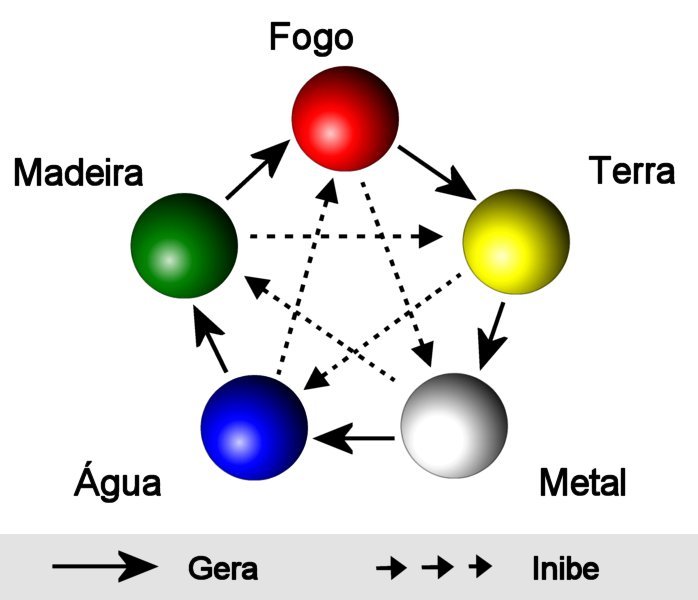
In TCM theory the emotions are linked to the organs and the flow of qi: anger injures the liver, joy the heart, pensiveness the spleen, grief the lung, and fear the kidney — and the emotions can regulate one another, the principle of "using one emotion to overcome another." Zhang argued that a physician could use words to evoke an emotion that counterbalances the emotion contributing to the illness. This matches the *Ze Feng* reasoning: understand where the illness came from, then guide the emotions. The emphasis is on grasping the cause and easing the mind, not on any supernatural force.
How to Read This Today
Viewed through modern medicine, the Inner Canon's account of zhuyou resonates with phenomena that modern fields take seriously: the therapeutic value of explanation and reassurance, suggestion and placebo responses, doctor–patient trust, and psychosomatic medicine. Modern medicine does not dispute that:
- a clinician's explanation and reassurance can change how a patient experiences symptoms;
- chronic anxiety and fear can worsen physical symptoms such as pain, insomnia, and digestive distress;
- a trusting therapeutic relationship improves adherence and recovery.
Two boundaries must be kept clear. First, a historical phenomenon is not a therapy recommended today. The zhuyou of the Inner Canon was an early, rudimentary mind–body intervention grounded in inquiry, an understanding of the cause, and verbal reassurance; it is not evidence that the method treats any named disease, and it cannot replace modern psychiatry, psychology, or ordinary clinical care. Second, the classical zhuyou should be distinguished from the folk "zhuyou magic" of talismans and spells. Later folk practices of drawing charms, reciting incantations, and exorcising spirits are objects of medical and folk history, not the original meaning of the Inner Canon, and should not be learned or used as treatment.
The Takeaway
The value of Zhuyou Ke is not that it preserves a lost "magical technique." It is the historical evidence that, more than two thousand years ago, the foundational text of Chinese medicine already recognized that a person's emotions and beliefs are connected with bodily symptoms, and that listening carefully, understanding the cause, and giving reassurance through words are themselves part of healing. This is continuous with TCM's holism of body and spirit (xing shen he yi).
Today, problems involving the interplay of emotion and bodily symptoms should be handled by trained physicians and psychotherapists within evidence-based medical and psychological care.
⚠️ Medical notice: This article is medical-history and cultural education. It is not treatment advice and is not a recommendation of so-called "zhuyou magic," talismans, or incantations. It describes a historical medical department and classical ideas, not a current therapy. For persistent emotional distress, sleep problems, or physical symptoms, seek qualified medical and mental-health care. If you have thoughts of self-harm or acute psychiatric symptoms, contact local emergency and crisis services immediately.
Frequently asked questions
Was Zhuyou Ke just "superstition"?
It cannot be dismissed that simply. In the Yuan and Ming it was an official specialty within the Imperial Medical Bureau, taught and examined by department, and in the Inner Canon its original meaning was explaining the cause of illness and easing the patient's mind; the classical text explicitly rejects the idea that spirits cause disease. The talisman-and-spell elements were later folk accretions that should be distinguished from the classical concept.
What did zhuyou treat, and does anyone practice it now?
This article does not present it as a living therapy, so it neither lists indications nor promises results. It was abolished from the official system in 1571 and never restored; scattered folk survivals are a matter of folklore and history. Emotional and psychosomatic concerns today should be addressed through conventional medical and psychological services.
Is zhuyou simply ancient psychotherapy?
It can be seen as an early recognition of the link between emotion and the body, and it shares a surface resemblance with psychotherapy in valuing words, trust, and feeling. But the theoretical frameworks, methods, and standards of evidence are entirely different; the two are not equivalent and cannot replace one another.
Sources
- 1*Huang Di Nei Jing · Su Wen*, ch. 13 "Yi Jing Bian Qi Lun," with Wang Bing's (Tang) commentary: "to speak out and explain the cause of the illness, without the labor of needles or stones."
- 2*Huang Di Nei Jing · Ling Shu*, ch. 58 "Ze Feng."
- 3Zhang Tingyu et al. (Qing), *Ming Shi* (History of Ming), ch. 74, "Zhi Guan San · Tai Yi Yuan" — the thirteen medical specialties, Zhuyou listed last.
- 4Shen Shixing et al. (Ming), *Da Ming Hui Dian* (Collected Regulations of the Great Ming), ch. 224, "Tai Yi Yuan" — the Longqing 5 (1571) department quotas.
- 5Zhang Jiebin (Ming), *Lei Jing*, ch. 12, "Zhu You" (with appended discussions).
- 6On the institutional lineage (Sui–Tang "Zhou Jin," Song "Shu Jin," Yuan–Ming "Zhuyou") and the 1571 abolition: medical-history research of the Institute of History and Philology, Academia Sinica.