The Five Elements Theory (五行)
The universe — according to Chinese medicine — is composed of five basic elements. Each element has its own properties and its connections to organs, emotions, seasons, and colors.
The Five Elements
🌿 Wood (木) — Spring
- Organ: Liver and Gallbladder
- Emotions: Anger
- Color: Green
- Direction: East
- Nature: Growth, expansion, upward movement
🔥 Fire (火) — Summer
- Organ: Heart and Small Intestine
- Emotions: Joy
- Color: Red
- Direction: South
- Nature: Heat, ascent, radiance
🌍 Earth (土) — Transition
- Organ: Spleen and Stomach
- Emotions: Worry
- Color: Yellow
- Direction: Center
- Nature: Stability, nourishment, transformation
🪙 Metal (金) — Autumn
- Organ: Lung and Large Intestine
- Emotions: Grief
- Color: White
- Direction: West
- Nature: Purity, contraction, order
💧 Water (水) — Winter
- Organ: Kidney and Bladder
- Emotions: Fear
- Color: Black
- Direction: North
- Nature: Cold, stillness, storage
Relationships Between the Elements
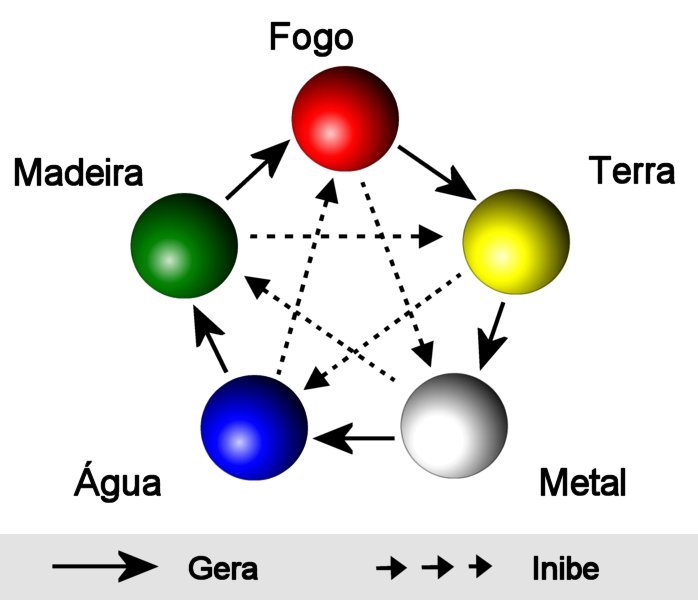
Generating Cycle (相生) — Each element nourishes the next
Wood ← generates ← Fire ← generates ← Earth ← generates ← Metal ← generates ← Water ← generates ← Wood
Example: Wood (Liver) nourishes Fire (Heart). If the Liver is weak, the Heart may be affected.
Controlling Cycle (相克) — Each element regulates the next
Wood ← controls ← Earth ← controls ← Water ← controls ← Fire ← controls ← Metal ← controls ← Wood
Example: Metal (Lung) controls Wood (Liver). If Metal is weak, Wood may become overactive.
Practical Application
When you understand the Five Elements theory, you can:
- 1Know which organ needs support according to the season and emotions
- 2Choose appropriate foods according to their color and nature
- 3Understand the cause of illness through the relationship between organs
- 4Prevent illness by strengthening the weak element before disease occurs
🌿 Seasonal tip: In spring (the Wood element), take care of your Liver health — reduce anger, eat more green foods, and exercise in the open air.